Truck tire recycling fees set to rise as Ontario municipalities halt scrap tire collections

Ontario fleets will soon pay increased recycling fees for every tire they buy, while the province’s tire recycling crisis keeps getting worse.
Beginning Aug. 1, the environmental handling fee on a heavy- and medium-truck tire will increase to $16, and passenger tire fees will see a 20% increase, to $6 per tire. This, while municipalities across Ontario suspend scrap tire collections because of mounting backlogs and tire dealers report growing stockpiles at their facilities.
The increases mark the second fee hike this year for some producer responsibility organization (PRO) networks, third-party private companies hired by tire manufacturers to manage the legal collection and recycling of tires in the province.
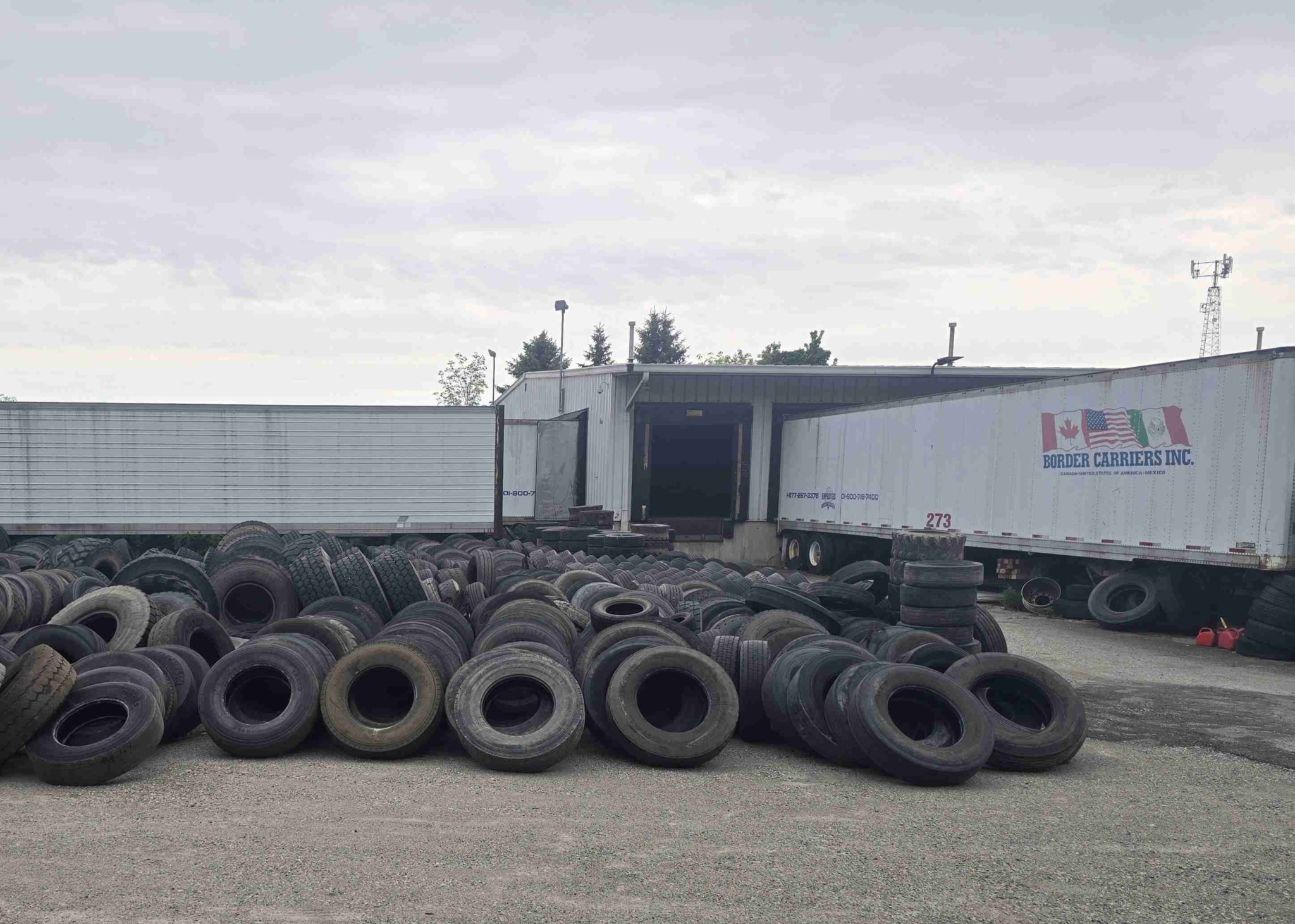
Unlike the previous province-wide tire stewardship program, individual PROs now set their own recycling fees. The province does not regulate the fees charged by individual PROs, nor does it require organizations to explain or justify increases. Instead, tire dealers have been directed to contact the applicable PRO for information about the latest fee changes.
Adam Moffatt, executive director of the Ontario Tire Dealers Association (OTDA) and Tire Dealers Association of Canada, told trucknews.com that OTDA or its members have not been told how the additional revenue will improve collection services, reduce existing backlogs or expand access to collection networks.
“Nobody minds paying fees as long as services are being provided for those fees…but when you charge a fee and you provide zero service, somebody has to step in and stop that.”
When asked about what the “dozens of emails and phone calls” that OTDA gets daily from dealers and collection sites are all about, he said, “Frustration and anger are the two words I would use. People don’t understand why, number one, they’re being forced to pay recycling fees but they’re not receiving any recycling services, and, number two, they’re becoming very frustrated because there is no solution in the short term.”
A lingering issue
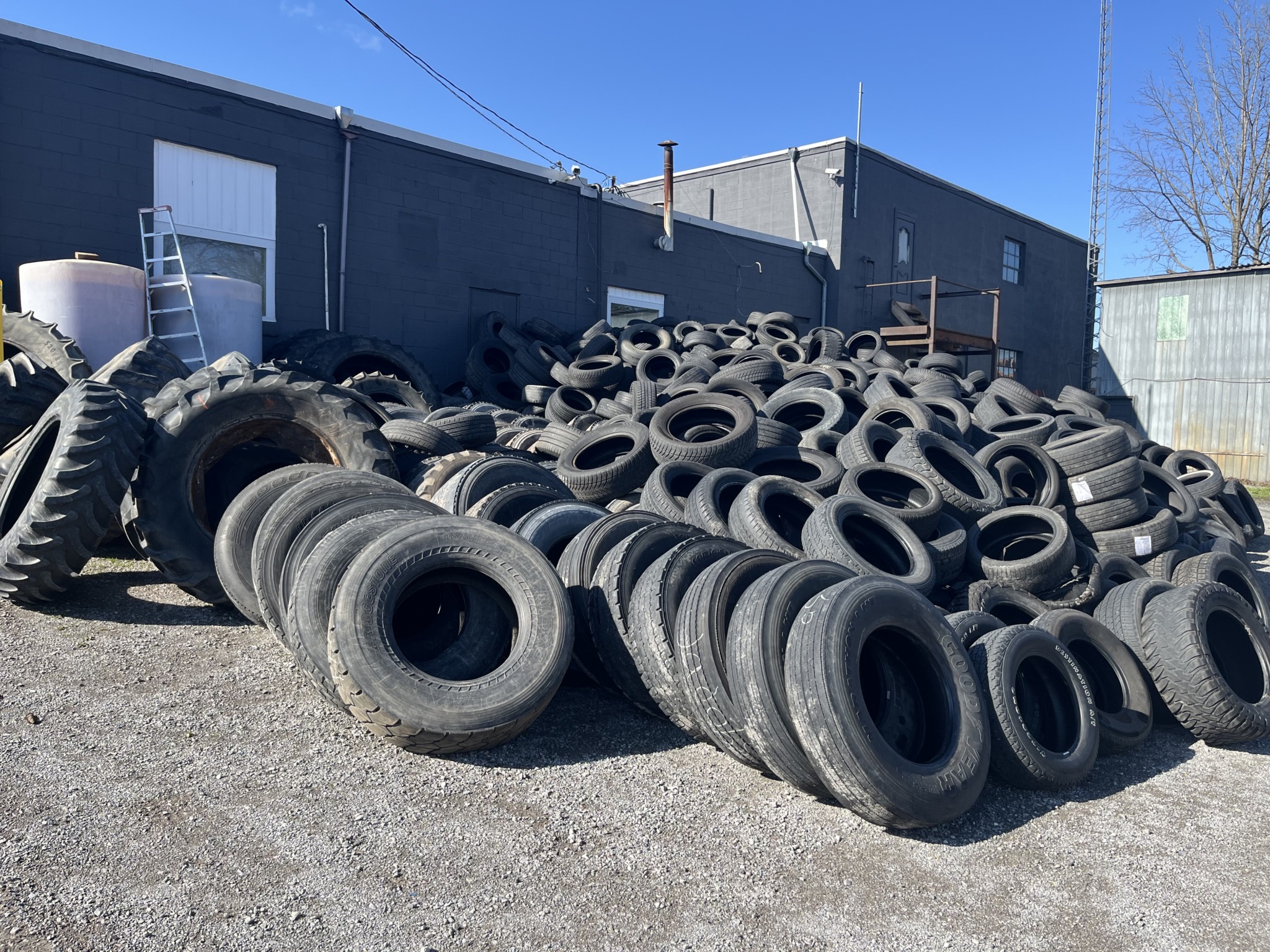
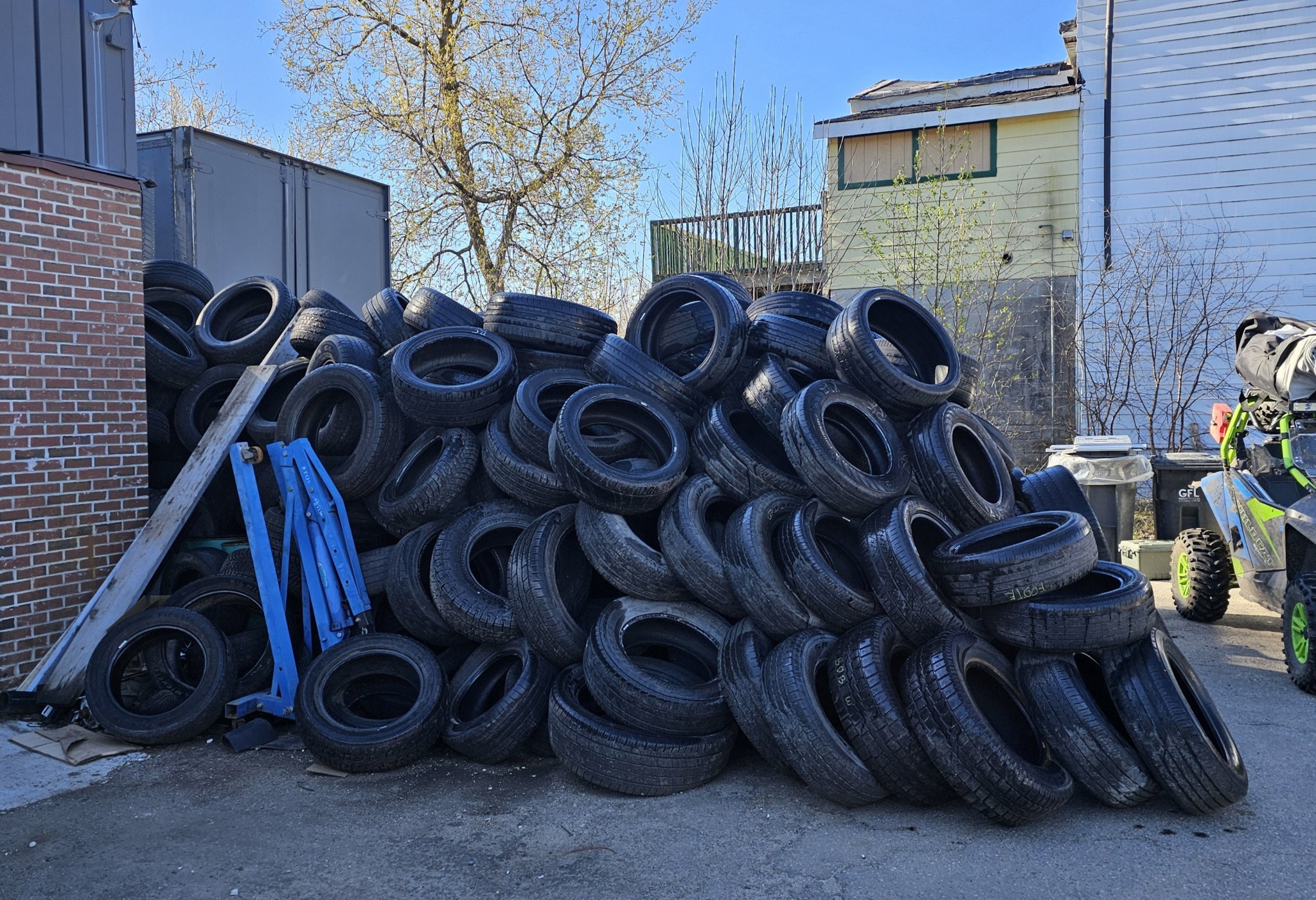
The latest developments represent yet another escalation in Ontario’s tire recycling problems. Earlier this year, trucknews.com reported that scrap tires were piling up at dealerships, fleet maintenance shops and municipal collection sites after the province reduced its tire recovery collection from 85% to 65% in January 2025.
That led the PROs operating in the province suspend pickup services upon reaching the targets in summer and remove hundreds of collection sites from their networks, leaving many dealers, fleets and municipalities without regular pickup service. Once targets are met, there is no requirement in the regulation to continue collecting additional tires, Moffatt explained. There are six PROs in Ontario, though most tire volume is handled by just two. One of those is eTracks, which accounts for 70% of Ontario’s total recovery volume.
Municipalities stop accepting tires
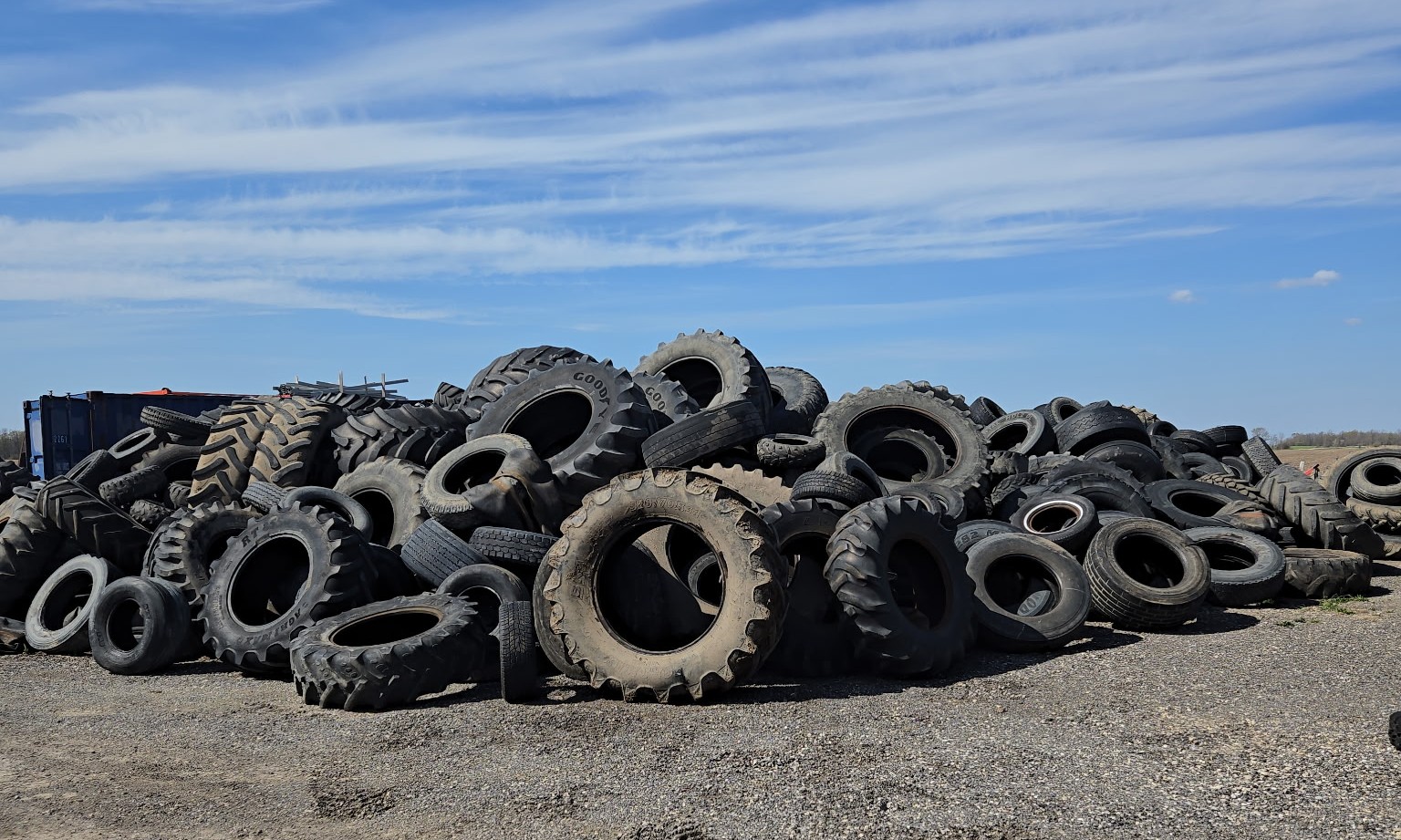
As of now, Moffat estimates there is anywhere from 750,000 to a million uncollected tires in the province.
“Between collection sites, what haulers are holding on to, what processors are holding on to, and just general backlogs, [we are] probably close to a million tires right now.”
Meanwhile, nearly a dozen of municipalities has just stopped accepting tires altogether. Those include Durham Region, South Huron, Norfolk County, and the Wallaceburg, Dover & Harwich public depot yards within the Municipality of Chatham-Kent, with even more locations expected to follow if collection services don’t improve.
“Durham is a huge municipality in Ontario. They shut down three of their collection sites, and we understand that each of the three collection sites has anywhere from 2,000 to 6,000 tires per site, and they’ve basically come out and said, ‘We can’t manage this,’’ Moffatt explained.
He added smaller municipalities have begun making similar decisions, raising concerns about where motorists and fleets will take used tires and how the province will address an estimated backlog of hundreds of thousands of tires before the busy fall tire-change season.
Regulatory changes in limbo
The Ministry of the Environment, Conservation and Parks (MECP) finally proposed amendments to Ontario’s tire recycling regulations earlier this year and held public consultation in spring. However, changes likely won’t be implemented until around September. This, Moffatt said, is way too late.
“Let’s say they roll out updates Sept. 1. They’re going to have to give the PROs and haulers at least 30 days to put equipment on the road to get people hired… Well, that takes us right into October. And, as you know, October, November, December, those three months are the busiest scrap tire generating months.”
Moffatt said the proposed regulatory changes should go beyond simply restoring collection capacity to what it was before.
The OTDA is urging the province to eliminate the current two-tier system so every business that generates scrap tires is included in a collection network, raise collection targets high enough to ensure virtually all end-of-life tires are recovered, and remove caps on fines so non-compliance becomes too costly to ignore.
“The ministry has already come out publicly and said they expect PROs to collect all generated scrap tires,” Moffatt said. “It’s good that you’re saying this, it’s good you’re taking the stand, but if you don’t start enforcing it, why would people start acting towards that?…There has to be enforcement behind it.”
Dealers running out of room
While the industry waits for regulatory changes, tire dealers are among those who continue to absorb the consequences.
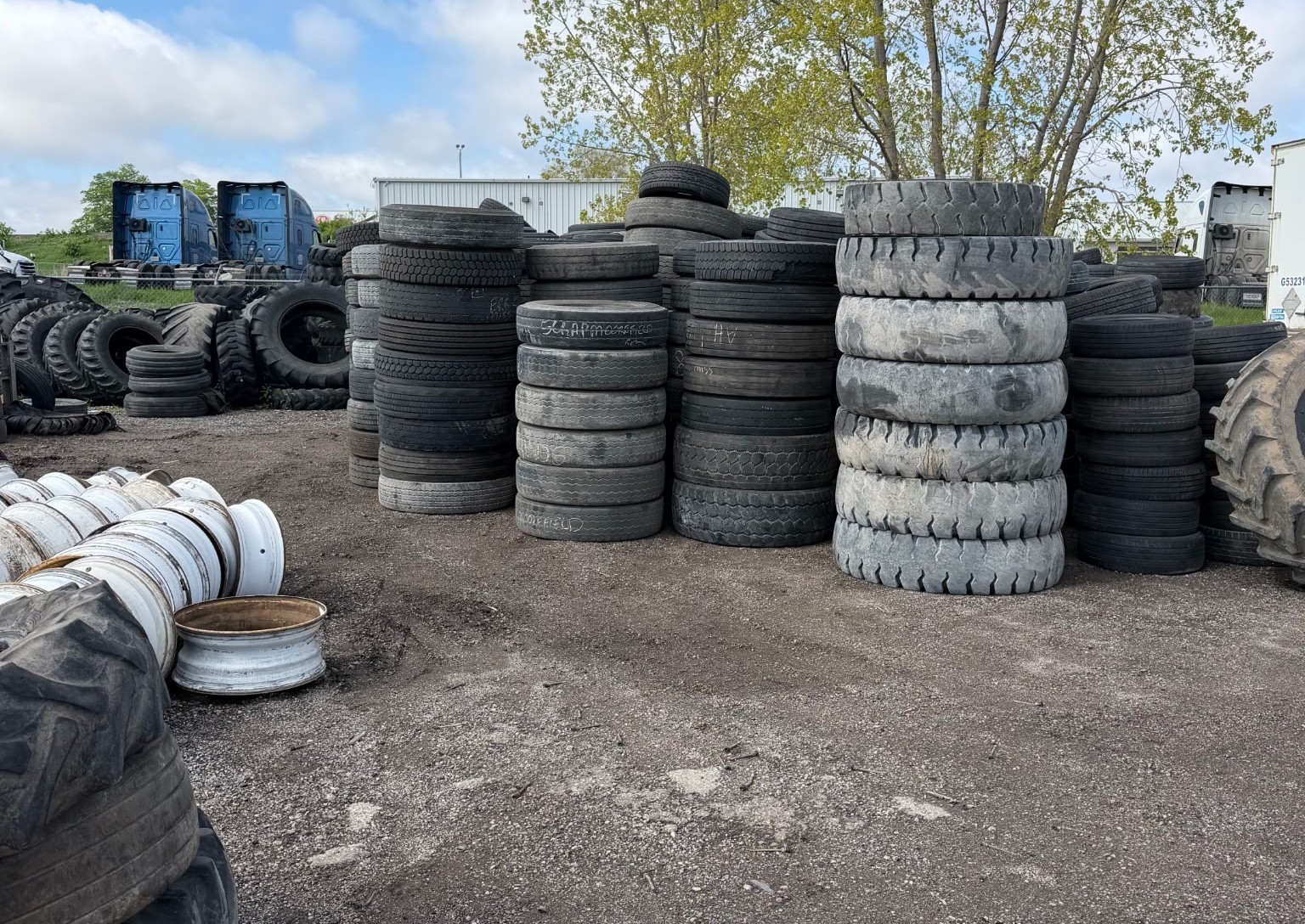
Moffatt said some dealers have gone as long as 10 months without having scrap tires collected, leaving businesses with growing inventories and shrinking storage space.
The issue concerns dealerships that supply commercial tires, too, as well as fleet service shops, because heavy-duty truck tires occupy much more storage space compared to passenger tires. “A commercial tire takes up roughly three times the space of a passenger tire,” Moffatt said.

And some businesses are now approaching the point where they may have to stop accepting used tires altogether. When asked about the options currently available to dealers, Moffatt said they offer little relief.
“The Resource Productivity and Recovery Authority (RPRA) isn’t providing any viable solutions other than to say, ‘Well, try to register with another network’ or, ‘You may have to pay a private company to have your tires removed.’ Or, ‘You can deliver your tires to somebody who has available room and space,’ and all three of these ideas are just not relevant,” he explained.
“No tire dealer — whether it’s a passenger or a commercial tire dealer — should have to pack up their tires and relocate them down the road because an arbitrary decision somebody made said that they’re not included [in the system] but the other people are. And even for the sites that have access to the system, they’re pushing back and saying, ‘Hold on, we don’t want 100 to 1,000 tires from that guy in one day. We can’t handle that. You can’t push the issue from them to us.’ And even on the idea of getting registered in another network, none of the PROs in Ontario right now are accepting collection sites. They’re all refusing to bring on collection sites. They’re all refusing to pick up additional tires.”
Growing tire inventories are also creating public safety concerns. With Ontario experiencing prolonged periods of hot, dry weather this summer — including the wildfire that broke out in Northern part of the province on July 15 — Moffatt warned that large tire stockpiles increase the risk of fires while also creating environmental and operational hazards.
Fleets urged to speak up
Moffatt said commercial fleets should make their concerns known to both the province and the Producer Responsibility Organizations responsible for collecting their scrap tires.
“They need to start advocating alongside the OTDA, they need to be reaching out to their MPPs. They need to be reaching out to their mayors, their councilors, demanding that they step up and demanding corrections to the system.”

Have your say
This is a moderated forum. Comments will no longer be published unless they are accompanied by a first and last name and a verifiable email address. (Today's Trucking will not publish or share the email address.) Profane language and content deemed to be libelous, racist, or threatening in nature will not be published under any circumstances.