Cargo theft, cyber risks driving insurance scrutiny in trucking

Rising cargo theft across Canada is prompting insurers to take a harder look at trucking operations, with fleets facing increased scrutiny over security protocols, tracking technology and risk-management practices as claims continue to climb.
Speaking at the Private Motor Truck Council of Canada’s annual conference in Niagara Falls, Ont., Maria-Christina Sorbo-Mayrand, an associate with Miller Thomson, said cargo theft, cyber threats and the growing use of telematics are reshaping how insurers assess risk throughout the supply chain. At the same event, a security technology provider warned fleets that preventing theft increasingly requires a shift from reactive measures to predictive and prescriptive security strategies.
“Insurance and risk management are strategic operational issues, not just legal or administrative tasks,” Sorbo-Mayrand said. “If you spend a little bit more time with your insurance broker or your insurance companies before having issues, once the issues do arise, and issues will always arise, it’s much easier to handle.”
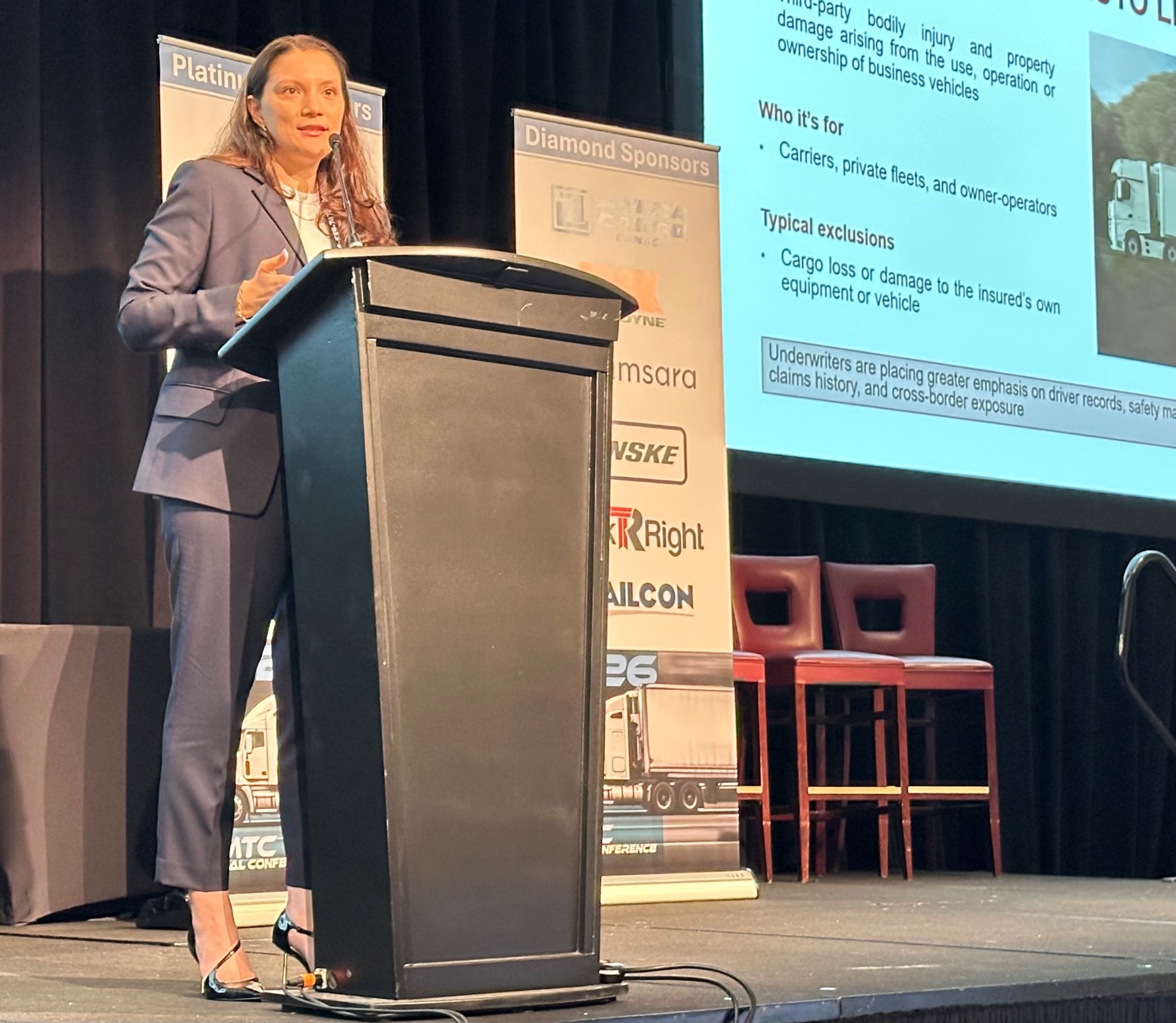
Sorbo-Mayrand told fleet operators, brokers, logistics providers and shippers that insurance should be viewed as a strategic business tool rather than an administrative requirement. Companies that proactively manage risk are generally better positioned when claims occur and may be better equipped to secure and maintain coverage, she said.
She outlined several types of insurance commonly used in transportation, including commercial auto liability, cargo insurance, commercial general liability, professional liability, environmental liability and cyber liability coverage. Each policy serves a different purpose and contains exclusions that businesses should understand before a loss occurs.
Additional endorsements may be needed
Commercial auto liability insurance typically covers third-party bodily injury and property damage arising from vehicle operations but generally excludes cargo losses. Cargo insurance is designed to protect goods while they are transported, loaded or unloaded, though additional endorsements may be needed to address risks such as theft, fire, collisions and refrigeration failures.
Cargo theft remains one of the fastest-growing concerns for the transportation industry, particularly involving high-value commodities such as electronics, refrigerated products and metals. According to Sorbo-Mayrand, the increase in theft-related claims is causing insurers to tighten underwriting standards and place greater emphasis on operational controls.
“Cargo theft is on the rise in 2026. It’s a critical issue across Canada, especially when we’re talking about high-value goods,” Sorbo-Mayrand said. “Because theft is on the rise, claims are on the rise. When claims are on the rise, insurers look at it more closely.”
Focus on identifying risks
As a result, insurers increasingly expect carriers and brokers to demonstrate documented security procedures, surveillance systems, real-time tracking capabilities and formal policies that are consistently communicated and followed by employees and contractors.
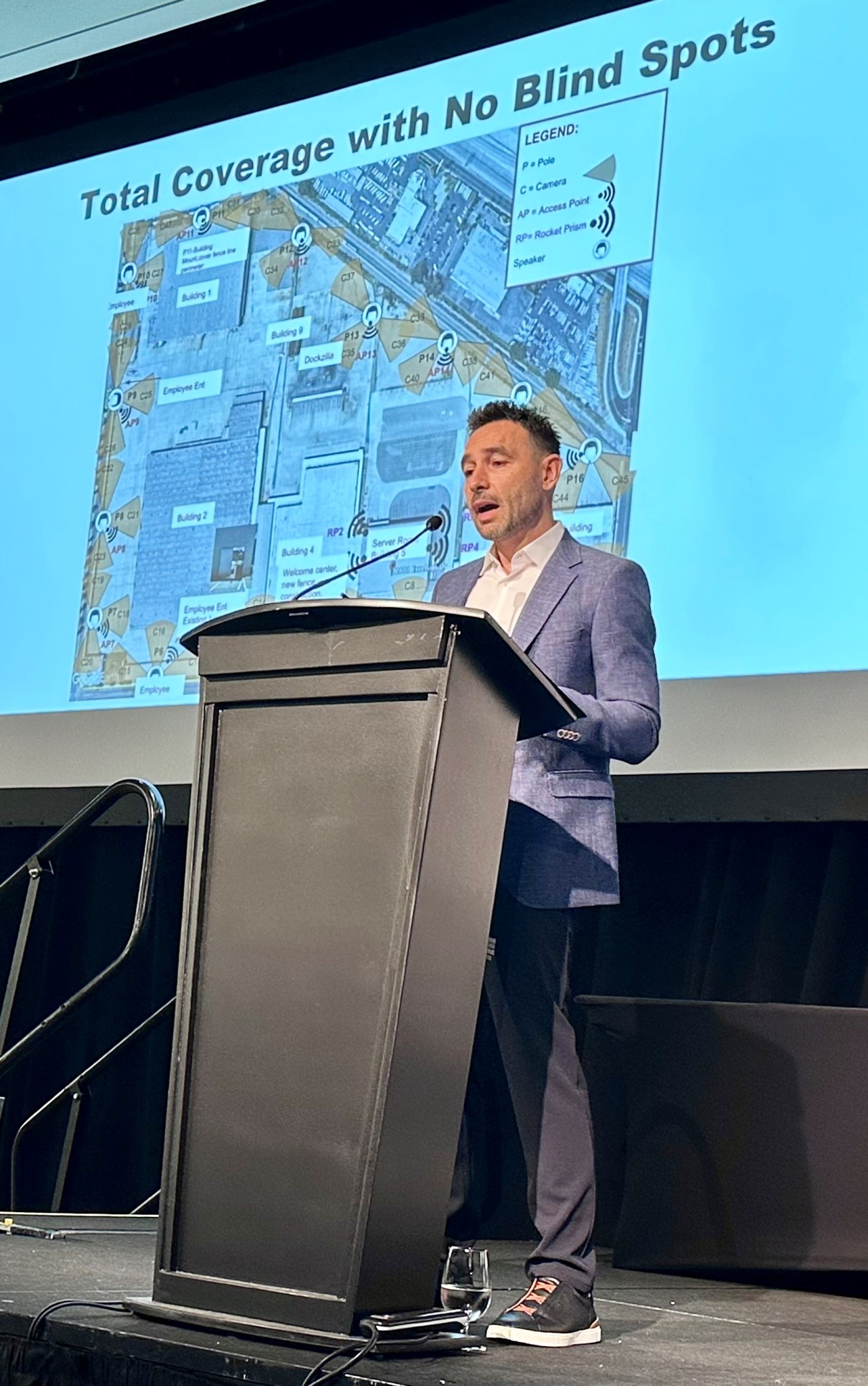
That message was reinforced by Mike Grabovica, CEO of Birdseye Security Solutions, who said fleets must move beyond simply reacting to theft incidents and instead focus on identifying risks before freight disappears.
“If there’s one takeaway from today’s presentation, you really want to think about how do you get on the predictive and prescriptive side of things going into 2026,” Grabovica said.
Grabovica said cargo theft patterns are evolving rapidly across North America, with organized criminals increasingly relying on fraudulent pickups rather than traditional break-ins or cargo-yard intrusions.
“Cargo theft is now increasingly becoming more related to fraudulent pickups,” Grabovica said. “That’s a major increase in its trend that we’re seeing.”
Cameras and sensors
He said conventional security measures such as perimeter fencing, gates and guards still play a role but are no longer sufficient on their own. Instead, fleets are increasingly deploying integrated networks of cameras, sensors and yard-management systems capable of monitoring activity, verifying drivers and identifying suspicious behaviour in real time.
The systems can automatically capture truck and trailer information, compare it with transportation and yard-management databases, verify driver credentials and document equipment conditions as vehicles enter and leave facilities. According to Grabovica, the goal is to create a unified platform that improves visibility, strengthens security and enhances operational efficiency.
Birdseye Security Solutions processes roughly one million gate transactions each month across North America. Grabovica said the company has observed a significant increase in theft attempts in recent years, highlighting the need for stronger preventative measures. Better yard controls can help fleets reduce losses, improve safety performance and demonstrate effective risk management to insurers, he added.
Fleets must demonstrate use of data
Technology is also transforming the claims process itself. Sorbo-Mayrand said advanced telematics systems and refrigerated trailer monitoring technology provide insurers with unprecedented visibility into vehicle movements, temperature settings and operational events before and during a shipment. Insurers increasingly expect carriers not only to possess these tools but also to demonstrate that they actively use the information generated by them.
“It’s not enough in 2026 to either just have the technology or just to have the policies,” Sorbo-Mayrand said. “You need to have proof that you’re putting it into place, that you’re able to gather and understand the data that’s coming from this information.”
The growing reliance on digital systems is also increasing concern about cyber risk. Sorbo-Mayrand said cyber liability insurance is becoming increasingly important for carriers, brokers, warehouses and third-party logistics providers as threats such as ransomware attacks, system outages, business interruption and data breaches become more common. However, coverage can be jeopardized if organizations fail to maintain minimum cybersecurity standards or if fraudulent activity originates within the company.
Verification procedures
She encouraged fleets to establish training programs, verification procedures and internal controls to reduce documentation errors and fraud.
Another area drawing heightened scrutiny from insurers involves freight brokers and subcontracted transportation. Sorbo-Mayrand warned that many transportation companies place too much reliance on certificates of insurance, which may confirm that coverage exists but often do not reveal exclusions, policy wording or whether other parties are protected under the policy.
The risks become more significant when loads are subcontracted or double-brokered without full visibility into the insurance arrangements of all parties involved. Sorbo-Mayrand said many denied claims stem from subcontracted loads or exclusions tied to subcontracting practices.
Regular reviews
She recommended strong carrier-vetting procedures, service agreements that prohibit unauthorized double brokering and regular reviews of insurance coverage. Telematics, dashcams and driver-behaviour analytics are also playing a growing role in underwriting decisions as insurers seek deeper operational insight.
Companies that can demonstrate strong safety performance and consistent risk-management practices may receive more favourable insurance terms, while some insurers are now requesting multiple years of telematics data during renewal reviews.

Have your say
This is a moderated forum. Comments will no longer be published unless they are accompanied by a first and last name and a verifiable email address. (Today's Trucking will not publish or share the email address.) Profane language and content deemed to be libelous, racist, or threatening in nature will not be published under any circumstances.