Truckload rates rise as capacity tightens despite soft freight demand

Truckload pricing is beginning to strengthen even though freight demand remains subdued, according to new quarterly research from U.S. Bank and DAT Freight & Analytics, suggesting carriers are gaining pricing power as capacity exits the market.
The report found dry van spot rates climbed to $2.14 per mile in May, up 31.3% from a year earlier and nearly 10% from April. Contract rates also continued to rise, reaching $2.18 per mile, a 9% year-over-year increase. Fuel surcharges increased to 73 cents per mile.
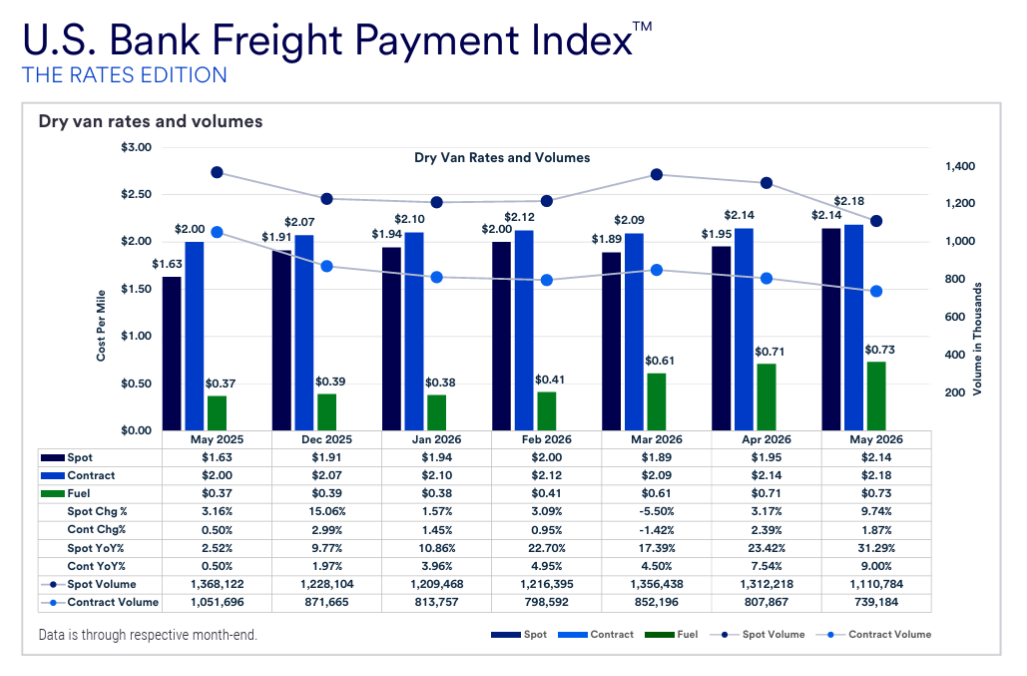
Researchers say the improving pricing environment is being driven less by stronger freight demand than by tightening truck capacity.
“The current cycle reflects a supply-led pricing adjustment rather than a demand-driven recovery,” the report states. “Spot markets led the repricing, contract rates are following, and volumes remain under pressure during the transition.”
The report notes that the traditional premium contract rates command over spot rates has narrowed significantly, from about 39 cents per mile to just 11 cents. That compression leaves shippers with less protection from future rate increases while signaling a broader reset in trucking prices.
“Freight volumes may appear stable, but costs are telling a different story,” said Alex Terry, director of transportation at Veritiv. “As contract rates catch up to spot pricing, shippers face growing exposure to higher transportation spend.”
The report also highlighted a continued divergence between the truckload and less-than-truckload (LTL) sectors. While truckload pricing is responding quickly to changing capacity conditions, LTL carriers have maintained pricing discipline despite mixed shipment volumes.
For example, Old Dominion Freight Line reported first-quarter LTL shipments per day declined 7.9% year over year while revenue per hundredweight, excluding fuel, increased 4.4%. XPO similarly reported a 4% increase in North American LTL yield excluding fuel alongside a 3% increase in daily shipments.
The report concludes that shippers should closely monitor the relationship between spot and contract pricing and prepare for continued upward pressure on transportation costs even if freight volumes remain relatively flat.
“Cost per mile can continue to rise in a muted demand environment when supply discipline and capacity tightening are the primary drivers of pricing behavior,” the report concludes.
Have your say
This is a moderated forum. Comments will no longer be published unless they are accompanied by a first and last name and a verifiable email address. (Today's Trucking will not publish or share the email address.) Profane language and content deemed to be libelous, racist, or threatening in nature will not be published under any circumstances.

I would say given what I have seen after 50 years in trucking that the freight rates are following a traditional pattern,oversupply of equipment always leads to a dog fight for freight and naturally prices drop.I believe a good part of the problem is still a carry over from Covid when an influx of new carriers entered the market and some existing mid sized carriers expanded.It was very predictable that this opportunistic growth from new comers seeing the high freight rates that existed during this time would drive equipment costs and of course that is what happened.Now you have a changing market with the most vulnerable carriers(being the start ups with over priced iron and under capitalized)fighting to survive and cutting rates just to stay afloat,this is unsustainable and history has shown rate cutting is death.This is a correction and clearly the industry is better off without the extra equipment and good riddance to the Bankruptcy is a profitable option crowd.Not to worry next cycle they will be back doing the same s**t.