Lincoln, Ont., enforcement blitz puts 41% of inspected trucks OOS

A one-day commercial vehicle enforcement blitz in Lincoln, Ont., placed 14 vehicles out of service after officers targeted vehicles using local roads to avoid the Vineland Ministry of Transportation inspection station.
The Town of Lincoln, working with Niagara Region, Niagara Regional Police Service, Ontario Provincial Police and the Ministry of Transportation, conducted its second coordinated commercial vehicle enforcement operation of 2026 on May 4.
Officers inspected 34 commercial vehicles during the roadside initiative, which focused on trucks and trailers travelling on local roads near the Queen Elizabeth Way. The inspections were conducted to verify compliance with provincial safety requirements and support safer travel throughout Lincoln.
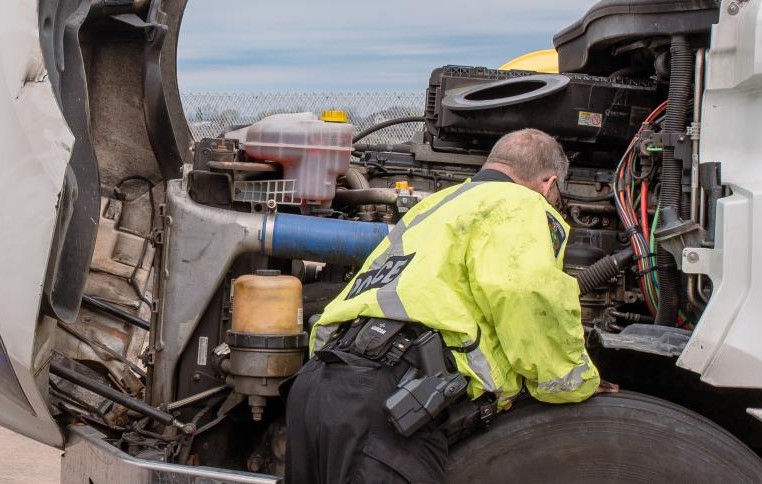
The operation resulted in 30 charges. Fourteen vehicles, or 41% of those inspected, were placed out of service. The town said the enforcement work continues alongside its collaboration with Niagara Region through the Truck Bypass Camera Monitoring Pilot Program.
The program, in place since 2023, uses detection technology to identify commercial vehicles bypassing designated inspection routes.
Have your say
This is a moderated forum. Comments will no longer be published unless they are accompanied by a first and last name and a verifiable email address. (Today's Trucking will not publish or share the email address.) Profane language and content deemed to be libelous, racist, or threatening in nature will not be published under any circumstances.
Only 41%?
That should raise more questions than applause.
If this was a targeted enforcement blitz aimed at commercial vehicles allegedly bypassing the Vineland inspection station, then a 41% out-of-service rate may sound impressive at first glance. But it also raises an uncomfortable question: what happened with the other 59%?
There is no way only 34 commercial vehicles moved through the Town of Lincoln that day. So the real issue is not simply how many trucks were inspected. The real issue is how those trucks were selected.
Were inspectors targeting the highest-risk equipment, or were they selecting the easy stops — the clean, convenient, low-effort inspections where nobody has to crawl too far under a trailer or get too dirty?
Because if this was truly a high-risk bypass enforcement initiative, then a 41% OOS rate suggests either one of two things: either the enforcement net was too broad and captured a lot of compliant carriers, or the selection criteria missed a significant number of worse offenders.
Look at it another way. If police detectives solved only 41% of murders, the public would be outraged. But when commercial vehicle enforcement places 41% of inspected trucks out of service, it gets treated like a victory lap.
That does not mean unsafe trucks should be ignored. Far from it. Unsafe equipment has no place on the road. But enforcement should be measured not by press-release optics, but by whether it is actually identifying the worst operators and removing the most dangerous equipment from service.
There is also a fairness question here. Are commercial vehicles operating in that area being treated as suspicious simply because they are on local roads near an inspection station? Is every truck in the area presumed to be skirting the scales unless proven otherwise?
At what point does commercial vehicle enforcement become the trucking version of “stop and frisk”?
Toronto had a serious public debate over that kind of policing. Maybe it is time the trucking industry had the same conversation about targeted commercial enforcement.
If MTO and police want public confidence, they should release more than the headline number. Tell us how many trucks were observed, how many were believed to be bypassing the scale, what criteria were used to select the 34 inspected vehicles, and how many serious mechanical defects were found versus paperwork or technical violations.
Until then, 41% is not the whole story. It is just the number they chose to put in the headline.

That’s pretty embarrassing for Police and MTO to have allowed compliancy to slip that far. Just image the number of deficient vehicles running up and down the road that didn’t get caught. Time and time again we’re hearing 30-50% of vehicles being place Out of Service. That is because of a severe lack of enforcement that operators just take the chance. Why maintain a truck when nobody forces you?
We need more enforcement! Not one day a year, in a town near you, but everyday enforcement of all laws everywhere.