Senate report urges action to prevent supply chain disruptions from rail, port strikes

Canada’s supply chain faces continued disruption unless Ottawa takes steps to reduce work stoppages in federally regulated rail and marine sectors, according to a new Senate report.
The Senate Committee on Transport and Communications is urging the federal government to create measures aimed at preventing strikes and lockouts from paralyzing freight movement, warning that supply chain disruptions in rail and ports create ripple effects across trucking, manufacturing, retail and export sectors.
The report, Keep Canada Moving: Labour, Management and Supply Chain in the Rail and Maritime Sectors, examines labor disruptions that have affected Canada’s federally regulated rail and marine sectors in recent years and raises concerns about future disputes, with several collective agreements set to expire in 2026.
“Any labor disruption in Canada’s rail and maritime sectors has a significant impact on the national economy,” the committee said in the report.
For trucking companies, interruptions in rail and port operations can mean freight bottlenecks, delivery delays and cargo backlogs that reverberate across the supply chain. Witnesses told the committee that Canada’s freight network is multimodal, meaning disruptions in one transportation mode quickly affect others.
“When one part of the chain is shut down, it can have a domino effect on the others,” the committee said.
The report comes as Canada seeks to increase overseas exports and diversify trading partners, goals the committee said require a more stable freight transportation system and stronger confidence in Canada’s reliability as a trading nation.
The committee heard that industries including grain, meat, fertilizer and potash production struggle to move products domestically and internationally during labor disruptions. Manufacturing sectors including food processing, mining, forestry, automotive production, energy, metal refining and defence are also affected because many depend on chemicals and plastics largely transported by rail.
Retailers, particularly small businesses, also bear the impact of supply chain interruptions caused by work stoppages, witnesses told the committee.
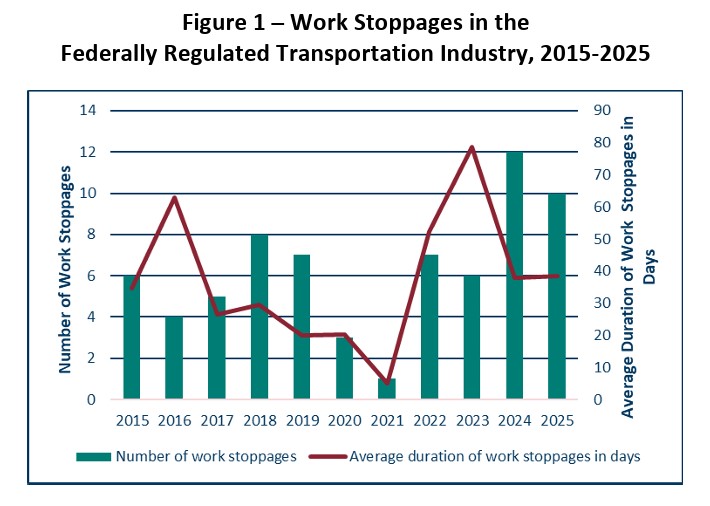
The report points to recent labor disruptions in rail and marine transportation as evidence of vulnerabilities within Canada’s freight system and warns that repeated interruptions can damage the country’s global reputation.
“Canada’s global reputation as a reliable trading partner is damaged when its supply chains grind to a halt,” the committee said.
Under the Canada Labour Code, the federal labor minister can intervene in labor disputes through Section 107, which permits the minister to direct the Canada Industrial Relations Board to help end work stoppages, strikes or lockouts in certain circumstances.
Parliament has also stepped in through back-to-work legislation. According to the report, such legislation was introduced six times between 2000 and 2021 to end labor disruptions.
Recommendations
However, the committee said relying on emergency intervention after labor disputes begin is not enough and recommended changes designed to reduce the likelihood and severity of disruptions before supply chains are affected.
Among its key recommendations, the committee called on the federal government to establish a Supply Chain Reliability Act or amend the Canada Labour Code to create an alternative dispute resolution process for rail and marine sectors.
The proposed framework would include mediation and arbitration to help resolve disputes before they escalate into prolonged strikes or lockouts.
The committee also recommended that Ottawa establish clear criteria governing the use of Section 107 to provide more predictability around federal intervention during labor disputes.
Any amendments to the section should be developed in consultation with employers and unions, the committee said.
Importance of reliable transportation system
The committee said a more reliable transportation system is increasingly important as Canada works to strengthen trade relationships abroad and position itself as a dependable supplier in global markets.
“These measures will improve the performance of Canada’s transportation network and strengthen Canada’s reputation as a reliable trading partner,” the report said.
The committee’s recommendations arrive as supply chain reliability remains a priority for transportation stakeholders, including trucking companies that often absorb the operational fallout when disruptions in other freight modes delay cargo movement.
Truck traffic often increases during rail disruptions as shippers seek alternative transportation options, while congestion at ports and rail terminals can leave truckers waiting longer for freight or containers to move through the system. The report stops short of recommending limits on the right to strike, instead focusing on dispute resolution tools aimed at maintaining freight movement while preserving collective bargaining rights.

Have your say
This is a moderated forum. Comments will no longer be published unless they are accompanied by a first and last name and a verifiable email address. (Today's Trucking will not publish or share the email address.) Profane language and content deemed to be libelous, racist, or threatening in nature will not be published under any circumstances.