Cellcentric launches next-gen BZA375 fuel cell for heavy-duty trucks

Cellcentric has officially unveiled its next-generation heavy-duty fuel cell system, the BZA375, positioning it as a viable zero-emission alternative to diesel in longhaul trucking and other demanding applications.
The system, previously known as “NextGen,” is now available for testing and validation, with series production targeted for the end of the decade.
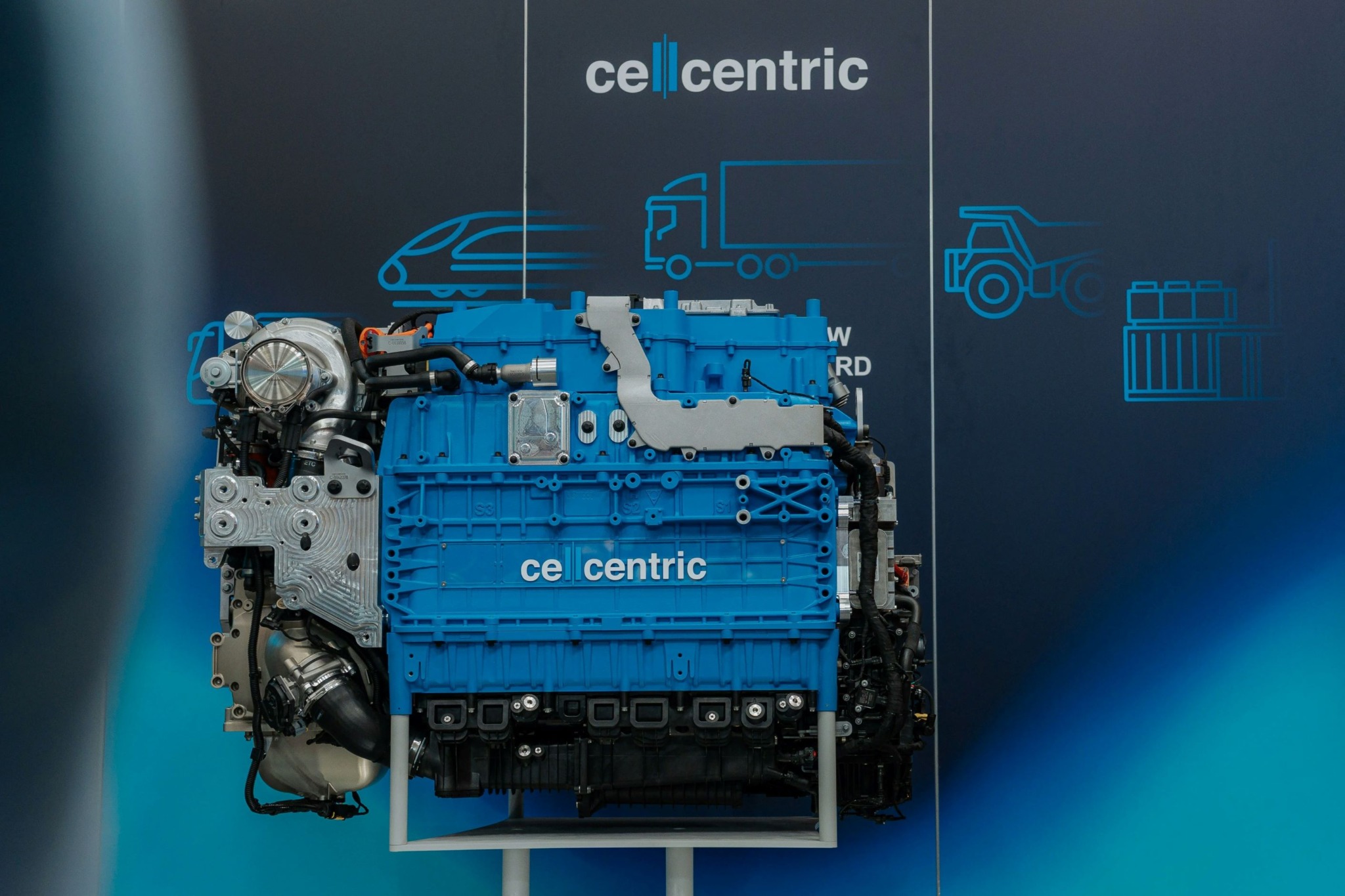
Developed in less than three years, the BZA375 is engineered to meet OEM performance standards while addressing one of the biggest hurdles in transport decarbonization: total cost of ownership (TCO). The company says the system is designed to compete directly with modern diesel engines in terms of durability, efficiency and operational flexibility.
“BZA375 is custom-tailored for the needs of heavy-duty, longhaul trucks,” said Nicholas Loughlan, chief technology officer of cellcentric, noting the company is positioning itself as an independent Tier 1 supplier open to multiple OEM partnerships.
Backed by its parent companies — Daimler Truck AG and Volvo Group — the system represents what both OEMs describe as a key step toward scaling hydrogen-powered transport.
Daimler Truck CEO Karin Radstrom called the launch “the next major milestone” in the company’s dual-path strategy of battery-electric and hydrogen-powered vehicles, while Volvo Group CEO Martin Lundstedt described it as a “game changer for logistics providers.”
Diesel-like performance targets
The BZA375 delivers up to 375 kW of continuous net power — more than 500 hp — from a single system, eliminating the need for the dual-system configurations used in earlier designs.
Among its headline performance gains:
- Up to 20% lower fuel consumption compared to its predecessor
- Hydrogen consumption below 6 kg per 100 km in a fully loaded 40-ton truck
- 40% reduction in waste heat, enabling simpler cooling systems
- 40% higher power density for easier integration into existing chassis
- Less than 500 kg system weight, preserving payload capacity
The system is also designed to fit into engine compartments originally built for 13-liter diesel engines, easing adoption for OEMs transitioning platforms.
Durability remains a key selling point, with a targeted service life of 25,000 hours — roughly equivalent to 10 years in longhaul operation and in line with diesel benchmarks.
Beyond trucking
While longhaul trucking is the primary focus, cellcentric is pushing a “one-product” strategy, positioning the BZA375 for use across multiple heavy-duty applications, including coaches, rail, mining and stationary power generation.
The goal is to drive economies of scale and accelerate cost reductions by deploying a single system across multiple industries.
For trucking specifically, the company says the system can support ranges beyond 1,000 km with refueling times comparable to diesel, a key advantage over battery-electric trucks in long-distance operations.
Hydrogen hurdle remains
Despite the technical progress, cellcentric acknowledged that widespread adoption will hinge on the development of a supporting hydrogen ecosystem.
In Europe alone, the company estimates roughly 2,000 hydrogen refueling stations will be required to meet 2030 CO₂ reduction targets for trucks and buses.
It argues that a dual approach — combining battery-electric and hydrogen infrastructure — will be more cost-effective than relying on a single technology pathway.

Have your say
This is a moderated forum. Comments will no longer be published unless they are accompanied by a first and last name and a verifiable email address. (Today's Trucking will not publish or share the email address.) Profane language and content deemed to be libelous, racist, or threatening in nature will not be published under any circumstances.