Fleets shift EV focus from sustainability to economics and resiliency

Commercial fleet electrification advocates say the conversation around battery-electric trucks has fundamentally changed — and survival now depends less on sustainability goals and more on economics, resilience and operational performance.
That was the consensus from a panel discussion at ACT Expo titled Commercial EV Reality Check – The Road Ahead for Fleets, featuring executives from Amazon, PepsiCo, LG Energy Solution, Harbinger and ABB E-mobility.
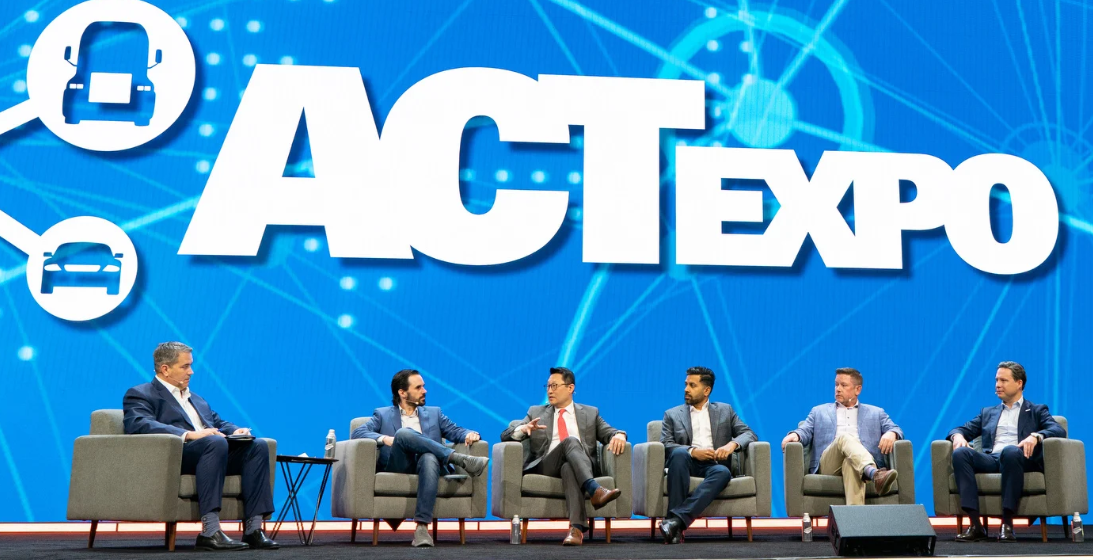
“I think we had maybe a rough 2025 where people waited to see what was really going to happen,” said John Harris, co-founder and CEO of Harbinger. “But I think we’re going to sell more EVs under this administration than the last one. There’s no better sales tool for EVs than fuel at $8.”
Panelists described an industry moving into a new phase where total cost of ownership (TCO), vehicle utilization and charging efficiency are taking precedence over early-stage deployment targets.
“The conversation is completely shifting,” said Brandt Hastings, president, North America, ABB E-mobility. “The first phase was all about rollout; how can I scale my network as quickly as I can? What we’re beginning to see now is the conversation has shifted to the economics of charging.”
That includes scrutinizing charger efficiency, avoiding overbuilding infrastructure, and designing charging systems that can expand alongside fleet operations.
“One to 2% efficiency loss on a charging system could equate to a massive amount of money,” Hastings said. “These have to be profitable businesses.”
For fleets, the economic equation is becoming clearer in some applications, particularly urban and last-mile delivery operations.
Mustafa Samiwala, principal, fleet development, Amazon, said the company is seeing the TCO benefits it anticipated, especially through reduced maintenance costs and improved uptime from software-defined vehicles.
“The fuel advantage is there over ICE vehicles and the maintenance aspects that everybody anticipated,” Samiwala said. “The one that’s surprising us pleasantly is the uptime benefit from the software-defined vehicle.”
He said connected vehicles and charging systems are producing large amounts of operational data that can now be analyzed to improve route planning, charger utilization and fleet availability.
“A small thing is patched via a software update before it becomes a big fleet-wide thing,” Samiwala explained.
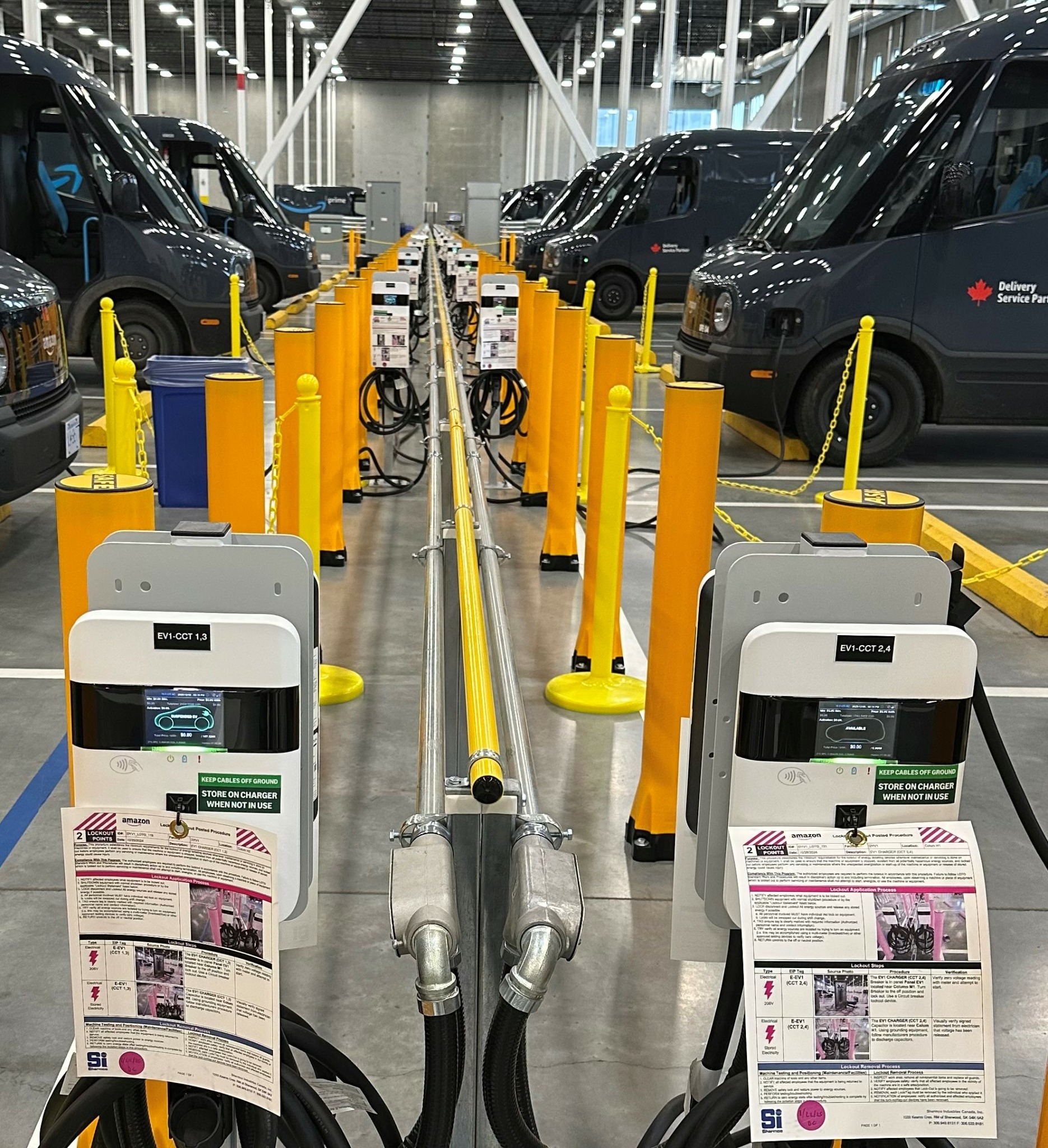
Amazon already has more than 50,000 chargers deployed to support its last-mile delivery operations, Samiwala said, though he acknowledged that medium- and heavy-duty charging infrastructure remains a major industry challenge.
“Last-mile has been manageable because the vehicles come back to the same depot every day,” Samiwala said. “Middle-mile is much more difficult because those vehicles don’t necessarily return to the same place.”
The industry’s focus on TCO is also driving changes upstream in battery manufacturing.
Bob Lee, president, North America, LG Energy Solution, said battery innovation has shifted away from maximizing performance and toward lowering costs through chemistries such as lithium iron phosphate (LFP), mid-nickel batteries and lithium manganese-rich (LMR) technologies.
“A lot of the innovation historically was based on high nickel content to drive higher energy density and performance,” Lee said. “Over the last few years, we really focused on more affordable products.”
Lee said the battery-electric market never fully met the lofty expectations established several years ago, but he remains optimistic about long-term growth.
“There are certain applications where EVs have already reached TCO,” Lee said. “Commercial vehicles with a lot of stops and short routes in urban areas — there’s already an advantage there.”
Still, fleets and manufacturers alike acknowledged several unresolved issues continue to slow broader adoption. Steve Hanson, senior director of fleet operations, engineering, and sustainability, PepsiCo, pointed to uncertainty surrounding residual values and long-term durability.
“We don’t know how EVs are going to age,” Hanson said. “What’s the life cycle really look like? And then what’s that secondary market look like?”
He added that infrastructure costs continue to distort fleet economics because companies are effectively building fueling systems from scratch.
“We don’t burden a diesel purchase with building the truck stop on the interstate,” Hanson said. “We’ve had that infrastructure for generations.”
Harris argued the industry also needs to improve how it matches vehicles to routes.
Early deployments often focused on extremely short-range applications because fleets were uncertain about battery performance and charging reliability, he said. More recently, some fleets swung too far in the opposite direction by targeting the longest possible routes to maximize fuel savings.
“Both of those are kind of the wrong answer,” Harris said. “For me, that comes down to buying a vehicle that has the right range and putting it on the routes that have the right range.”
He praised fleets such as Amazon for strategically deploying EVs in favorable climates and applications first.
“We probably don’t have to put all the EVs in Maine to start,” Harris said.
Driver acceptance has also emerged as an unexpected advantage for fleet operators. Hanson said PepsiCo has seen strong buy-in from drivers once they become familiar with the vehicles.
“There’s been high acceptance,” Hanson said. “We’ve definitely converted some skeptics.”
Harris added that electrification allows manufacturers to rethink vehicle design from the ground up.
“This isn’t getting drivers to convert to an inferior vehicle experience,” Harris said. “It’s actually a really great experience.”
Artificial intelligence was another recurring theme throughout the discussion. Samiwala said AI is already helping Amazon optimize route planning, charging schedules and power management across its rapidly expanding EV ecosystem.
“The tools that you use to plan ICE vehicles just don’t work for electric vehicles,” Samiwala said. “There’s way more inputs that you have to take into account.”
Hastings added AI is also improving charger reliability by identifying maintenance problems before they occur.
“I want to know about a problem before it becomes a problem,” Hastings said.
Harris suggested the explosive growth of AI data centers may indirectly accelerate commercial fleet electrification by forcing faster upgrades to electrical infrastructure.
“The advantage we’re going to have in vehicle electrification is now there is a massive wave of deployment being held back by bad electrical infrastructure,” Harris said. “Once people figure out how to deploy gigawatts of power much more quickly, we’re going to benefit from that in vehicle electrification.”
Despite the challenges, panelists repeatedly emphasized that commercial EV adoption is continuing to grow, just under a more disciplined business framework than many expected a few years ago.
“At the end of the day, total cost of ownership is what wins in the marketplace,” Lee said.
Have your say
This is a moderated forum. Comments will no longer be published unless they are accompanied by a first and last name and a verifiable email address. (Today's Trucking will not publish or share the email address.) Profane language and content deemed to be libelous, racist, or threatening in nature will not be published under any circumstances.

Tesla has it all figured out. The rest, not yet but hopefully soon. And I agree, LFP batteries are the best option for safety, long life, resale value and the ability to charge to 100% every day if needed. That’s what I have in both my cars. Wouldn’t have it any other way. Unfortunately, even Tesla doesn’t have LFP batteries in their Semi yet. I wish they would offer a much cheaper version with LFP. I would order one right away. I can’t afford a truck with nickel based batteries.