Neglect Tires at Your Peril: Improper inflation is costing fleets big

Every day, thousands of drivers start their shift by whacking their tires with a hammer. They hear that satisfying thump and off they go. They probably don’t give a second thought to the shape of their tires’ contact patch or sidewall deflection.
Whatever air is in those tires is apparently good enough. But good enough doesn’t work for tires. Running tires even 10% below the recommended inflation pressure can quickly turn expensive assets into children’s playground swings.
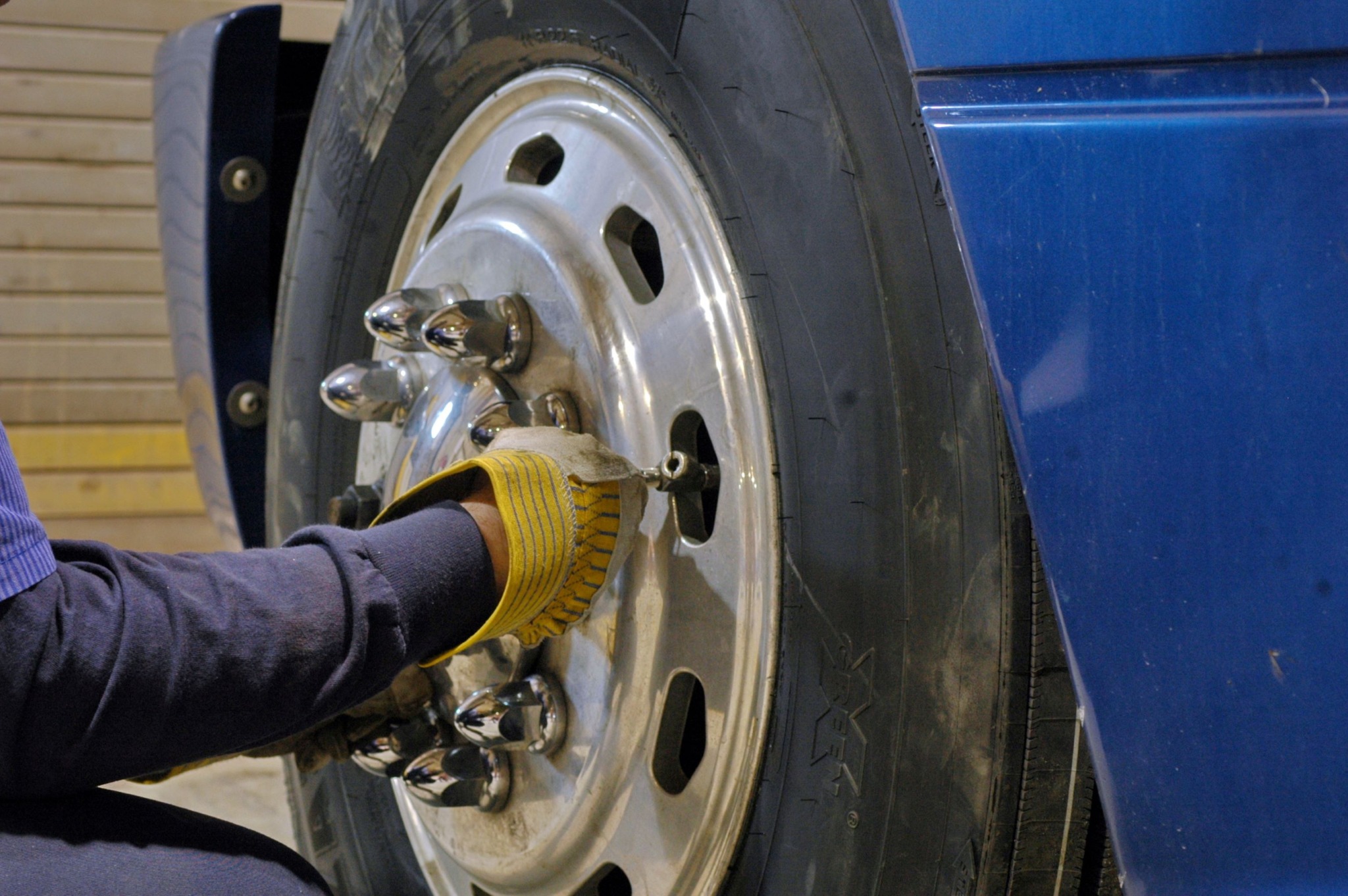
“Underinflation has a direct relationship with tread life and tire health,” says Ralph Dimenna, chief commercial officer at Aperia Technologies, makers of the Halo Tire Inflator. “Assuming that the customer has specified the correct cold inflation pressure for the load they are carrying, 10 psi of underinflation equates to a 10-12% reduction in tread life [because] the tire wears faster or more unevenly.”
The pressure inside the tire not only supports the load on the tire, but it also supports the casing sidewall, helping to maintain the designed amount of deflection as it rolls through the contact patch. The inflation pressure also influences the size and shape of the tire’s contact patch.
Where the rubber meets the road
An ideal contact patch for a typical 11R22.5 drive or trailer tire would be roughly a 10-inch square. Overinflated tires can exhibit a narrower contact patch that’s also rounded at the front and back.
The tread face bows out slightly, enlarging the circumference of the tire at the center of the tread relative to the shoulder of the tire. The shoulder actually lifts very slightly so that it’s not making constant contact with the pavement.
You’re more likely to see this in a lightly loaded tire with high inflation pressure, ie, a 100-psi tire on an empty trailer. It’s also a perfect set-up for increased edge wear. And once the tire begins to wear irregularly due to under inflation, it’s almost impossible to reverse that wear.
“You can slow it down if you catch it soon enough, but if you wait until the point that it’s noticeable, it’s too late. You won’t get it back,” cautions John Overing, general manager, Aeolus Tire (Canada).
If losing an expensive drive or steer tire to self-inflicted irregular wear isn’t bad enough, allowing the situation to deteriorate will inexorably result in a blowout. An ages-old study by the U.S. Department of Transportation, which studied tire debris and found that about 80% of tire blowouts were a direct result of underinflation caused by undetected creeping air loss.
Sidewall deflection
The tire sidewalls are also sensitive to inflation pressure, especially underinflation. They are designed to flex at a certain point where the rubber and internal steel cords are thinner, which reduces the amount of energy (fuel) required to roll the tire.
When the tire is properly inflated, that point is about mid-way between the tread shoulder and the bead.
The distance between the center of the axle and the ground is called the static loaded radius. That measurement should be the same regardless of the load on the tire. It’s controlled by the air pressure within the tire.
“When the tire is underinflated, the sidewall will flex more, and it will also raise the flex zone up closer to the bead, where the sidewall is thicker,” notes Overing.
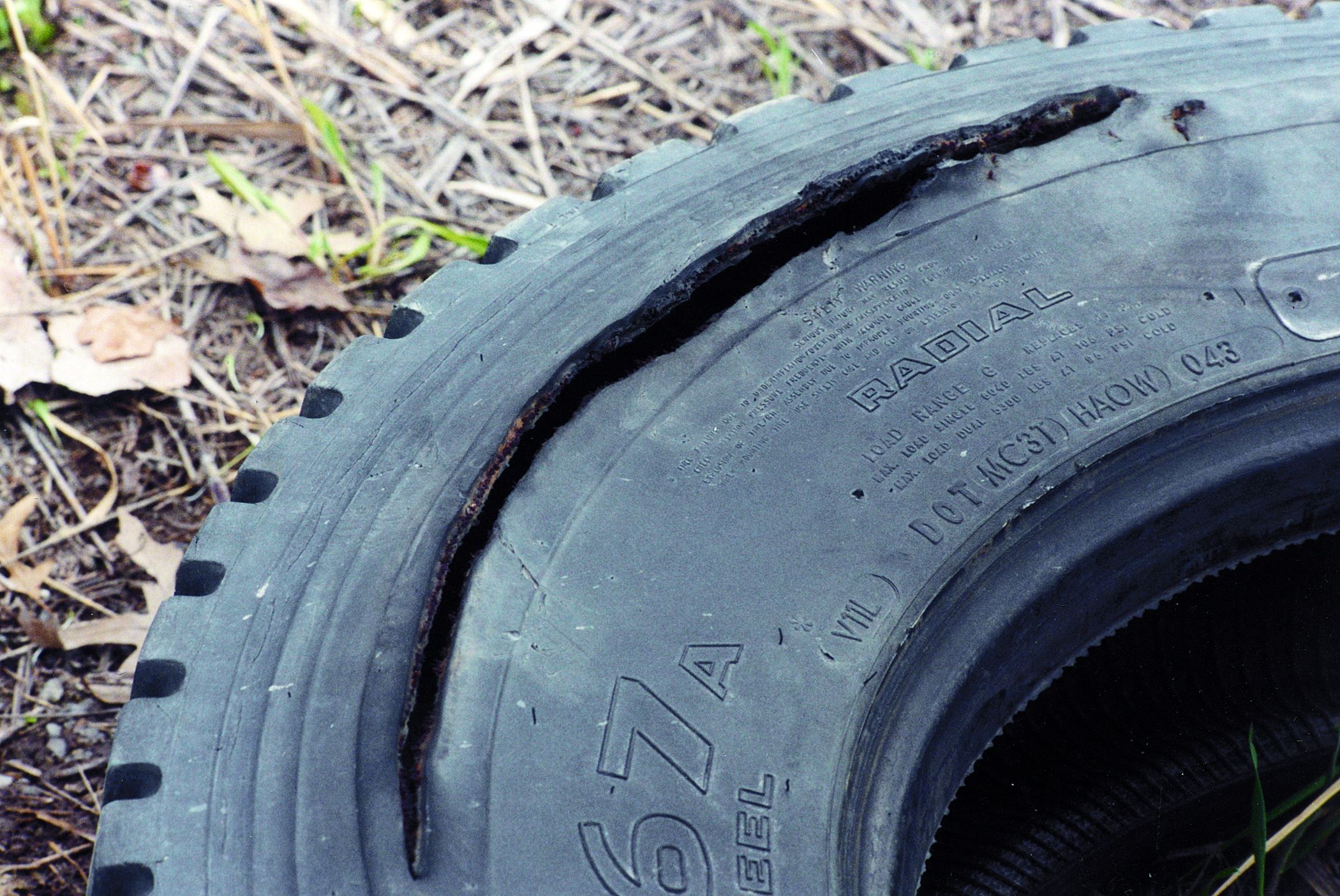
The thicker rubber and additional steel cords in that area generate more heat when they flex than the thinner part of the sidewall does. Excess heat will eventually start breaking down the rubber compounds, and with the additional flexing of the steel cords — like bending a paper clip — they will eventually fail, possibly leading to the dreaded “zipper rupture.”
Conversely, overinflating the tire, ie., too much pressure for the load (think 100 psi in the tire, nothing in the trailer), stiffens the sidewall, distorts the footprint, and increases the static loaded radius.
“If you put a load on the tire, it will compress, so you need to put air in to bring it back up,” Overing says. “That’s why static loaded radius is so critical. It ensures that the tire flexes in the proper part of the sidewall.”
Inflate for the load
Now that we have illustrated the impact under- and overinflation has on tires, is there a one-size-fits all inflation pressure?
According to Aperia’s Dimenna, most Canadian fleets tend to run their drive and trailer tires at 95-105psi. Steer tires tend to run slightly higher pressures of 110-120psi for good reason, but that’s another story for another day.
“Correct tire inflation is a function of the axle load the tires are carrying as well as the environmental conditions,” he says. “Lighter loads — pillows or potato chips, for example — can run with lower pressures.”
A flat, square footprint is what you want for even tread wear, so that might mean rethinking the standard 100-psi tire pressure, especially if you run close to U.S. weights or lighter, as most truckload fleets do.
Some automatic tire inflation systems, such as Hendrickson’s Tiremaax Pro and Pro-LB systems, use air suspension pressure sensors to inflate or relieve tire pressure to match the load on the tires.
With light loads or empty trailers, the system will depressurize the tire down to a minimum of 75 psi for duals and 90 psi for wide-base singles. The upper limit is a customer-settable parameter. Both these systems also equalize the pressure across the two tires.
“Lowering the tire pressure reduces tire wear and tire maintenance compared to a system that maintains consistent pressure,” says Hendrickson’s engineering R&D manager for the Vehicle Technology Group, Jared Haney. “We’re able to optimize that contact patch throughout all the different load cycles and environments.”
Back in the day, when a Tier 1 drive tire cost $500, fleets didn’t lose much sleep over irregular wear. But with prices for such tires now hovering around a thousand dollars, there’s value in keeping them around longer. When it comes to checking tire pressure, a hammer is a pretty blunt instrument.

Have your say
This is a moderated forum. Comments will no longer be published unless they are accompanied by a first and last name and a verifiable email address. (Today's Trucking will not publish or share the email address.) Profane language and content deemed to be libelous, racist, or threatening in nature will not be published under any circumstances.