Trailer orders cool in June as Wabash opens 2027 order board early

June trailer orders eased from the unusually strong pace seen this spring, but industry analysts say the slowdown reflects a return to normal seasonal buying patterns rather than weakening demand.
FTR reported U.S. net trailer orders totaled 14,474 units in June, down 28% from May but up 14% compared to June 2025 and 8% above the 10-year average for the month.
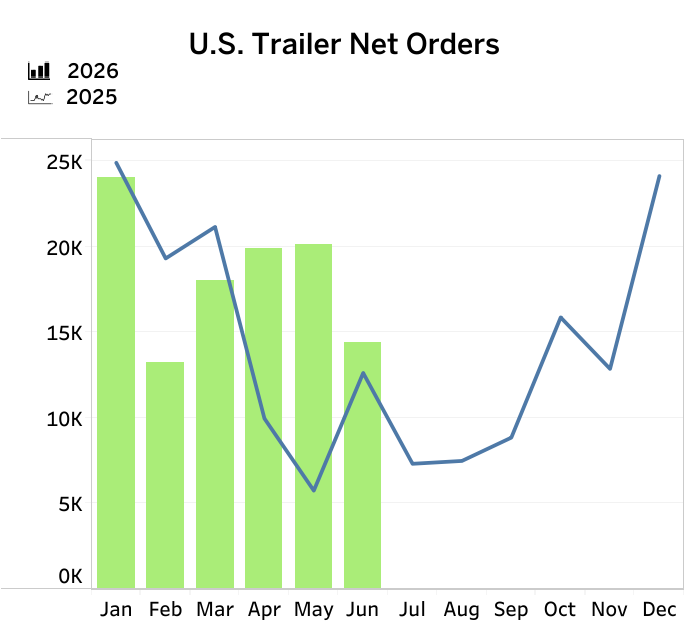
ACT Research’s preliminary estimate came in slightly lower at 13,500 units, down 35% month over month and nearly 9% below year-ago levels. The firms use different methodologies, but both pointed to the same conclusion: after an unusually strong April and May, trailer ordering has settled into a more typical seasonal lull.
“After several months with net orders behaving counter to historical patterns, the seasonal slowing of orders arrived with the June data,” said Jennifer McNealy, director of CV market research and publications at ACT Research.
McNealy noted that trailer ordering patterns have been anything but typical over the past year. Rather than beginning last fall, as is customary, the latest order cycle did not gain momentum until December. Strong freight rates helped fuel stronger-than-expected demand in April and May, she said, but many fleets remain cautious after several difficult years.
She added that higher maintenance costs, downtime, and the decision whether to repair existing equipment or purchase new trailers continue to weigh on buying decisions.
FTR reached a similar conclusion, describing the market as a selective, replacement-driven recovery rather than one marked by broad fleet expansion.
“Stronger freight rates are supporting fleet confidence, but freight volume growth remains limited, and many carriers are still rebuilding margins,” the firm said.
Trailer manufacturers also continue to match production closely to demand. FTR reported June trailer builds rose 6% from May to 17,633 units but were down 1% year over year. Through the first six months of 2026, production was essentially flat, slipping 0.5%.
Trade actions cloud outlook
Both analysts pointed to trade policy as an emerging factor affecting trailer purchases.
FTR senior analyst Dan Moyer said Section 232 steel and aluminum tariffs, along with pending antidumping and countervailing duty cases involving imported van trailers and trailer subassemblies, are already beginning to affect equipment pricing.
“The recent jump in the PPI suggests that policy-related costs are very likely already reaching equipment prices,” Moyer said.
Rather than creating new demand, he said the trade actions are more likely to alter where fleets source trailers and when they place orders. If imports decline faster than domestic production can increase, fleets could face longer lead times and higher prices.
The antidumping and countervailing duty investigations cover van trailers and key subassemblies imported from Canada, China, and Mexico. Preliminary decisions are expected later this year.
Wabash moves early
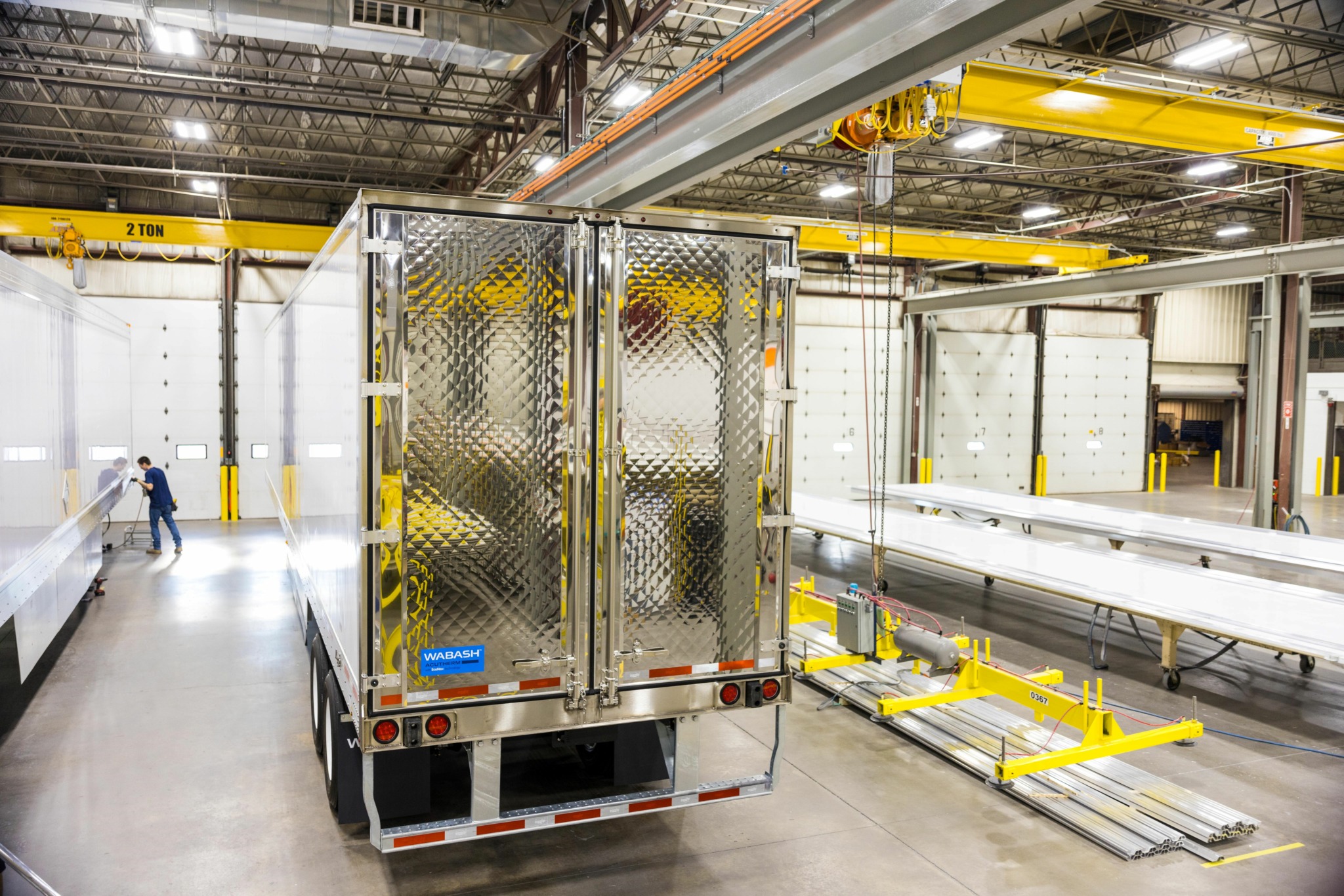
Signs that fleets are planning purchases earlier than normal also prompted Wabash to begin accepting orders for 2027 production of its DuraPlate dry van trailers several months ahead of the traditional fall order cycle.
President and CEO Brent Yeagy said customers are already making acquisition plans for next year and want earlier visibility into pricing, configurations, and delivery schedules.
“The trailer buying cycle has moved,” Yeagy said. “Our customers are planning their 2027 fleet acquisitions right now, not in October.”
Chief Commercial Officer Drew Schwartzhoff said the move reflects stronger early-year trailer demand and allows fleets to better coordinate trailer purchases with tractor orders, capital spending, and route planning.

Have your say
This is a moderated forum. Comments will no longer be published unless they are accompanied by a first and last name and a verifiable email address. (Today's Trucking will not publish or share the email address.) Profane language and content deemed to be libelous, racist, or threatening in nature will not be published under any circumstances.