Motive combines cargo security and cold-chain monitoring in new sensor

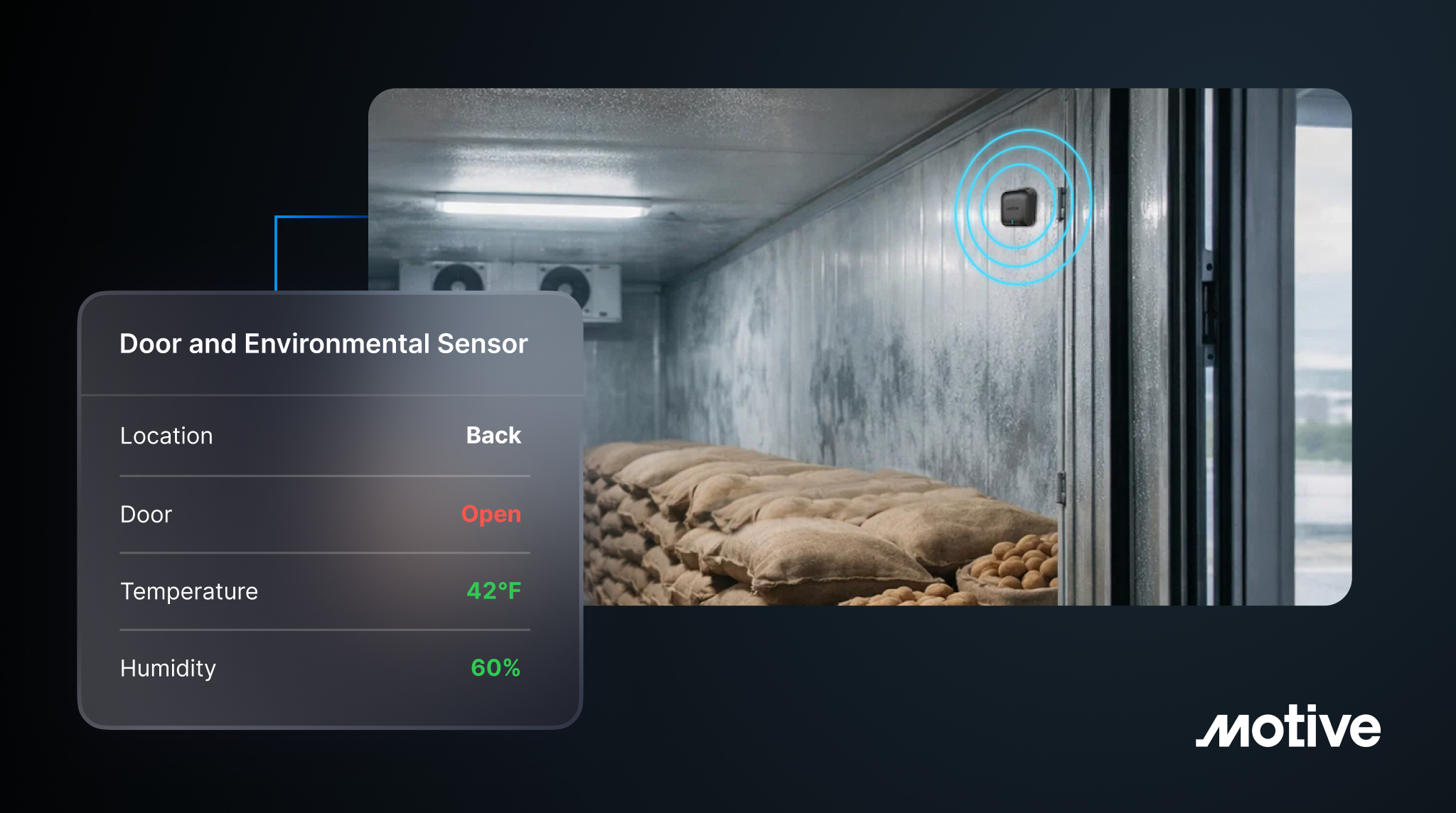
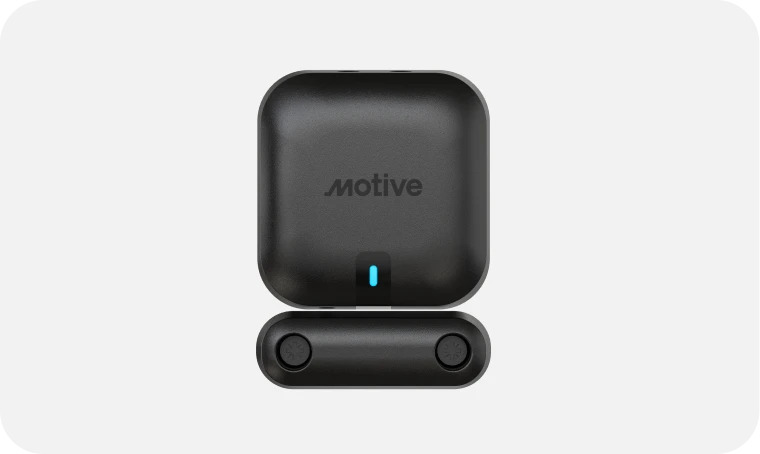
During its Vision conference in Nashville, Tenn., this week, Motive revealed a new Door and Environmental Sensor that combines temperature, humidity, and cargo-door monitoring into a single device, aiming to help fleets identify not only when cargo conditions change, but why.
However, the sensor is designed for both refrigerated fleets and carriers moving high-value or sensitive cargo, said Robert Higdon, director of product at Motive, in an interview with trucknews.com during the conference.
He argued that temperature, humidity and door status should not be treated as separate signals because temperature changes and cargo door events are often connected. “They’re not just three independent things where you want to have siloed systems,” Higdon said, explaining that often, the risk of spoilage can be traced back to a door that was left open too long. So the sensor connects the data points, allowing fleets to see exactly how door openings correlate with temperature changes and potential spoilage risks.

The device can be installed on swing and roll-up doors, and is designed for a range of vehicle and equipment types, including trailers, box trucks, straight trucks, reefers and small vans.
For swing doors, the sensor works with a magnet. One component can be mounted on a fixed surface, while the other moves with the door. When the two pieces are together, the sensor recognizes the door as closed. Roll-up doors can be monitored differently. Rather than depending only on a magnet, the sensor can use the door’s change in orientation and tilt angle to determine whether it is open or closed.
The sensor is also designed to connect wirelessly to Motive’s Vehicle Gateways, Asset Gateways, and pairs alongside Environmental Sensors.
“We try to think about all of that holistically,” Higdon said. “Not just within combining those sensors in a single device, but having that operate seamlessly across the other existing parts of the Motive platform that companies are already using.”
Real-time alerts
He also told trucknews.com that one of the biggest product design priorities is ensuring alerts are meaningful, not just frequent, adding the product team focuses on who needs the alert, when they need it, and when it may not be relevant.
Some organizations prefer temperature or door-status alerts to be sent directly to fleet managers, allowing them to coordinate a response. Others want drivers notified immediately so they can investigate issues while still on the road. In many cases, both parties receive the alerts simultaneously.
In any case, the settings are customizable. “It’s about what is the organization’s best practice for how you actually prevent spoilage,” Higdon said.
Historically, refrigerated fleets relied on printed temperature logs reviewed after a trip was complete. Today, customers are looking for alerts while freight is still in transit so that if temperatures begin deviating from required set points, a preventive measure can be taken before cargo quality is affected.
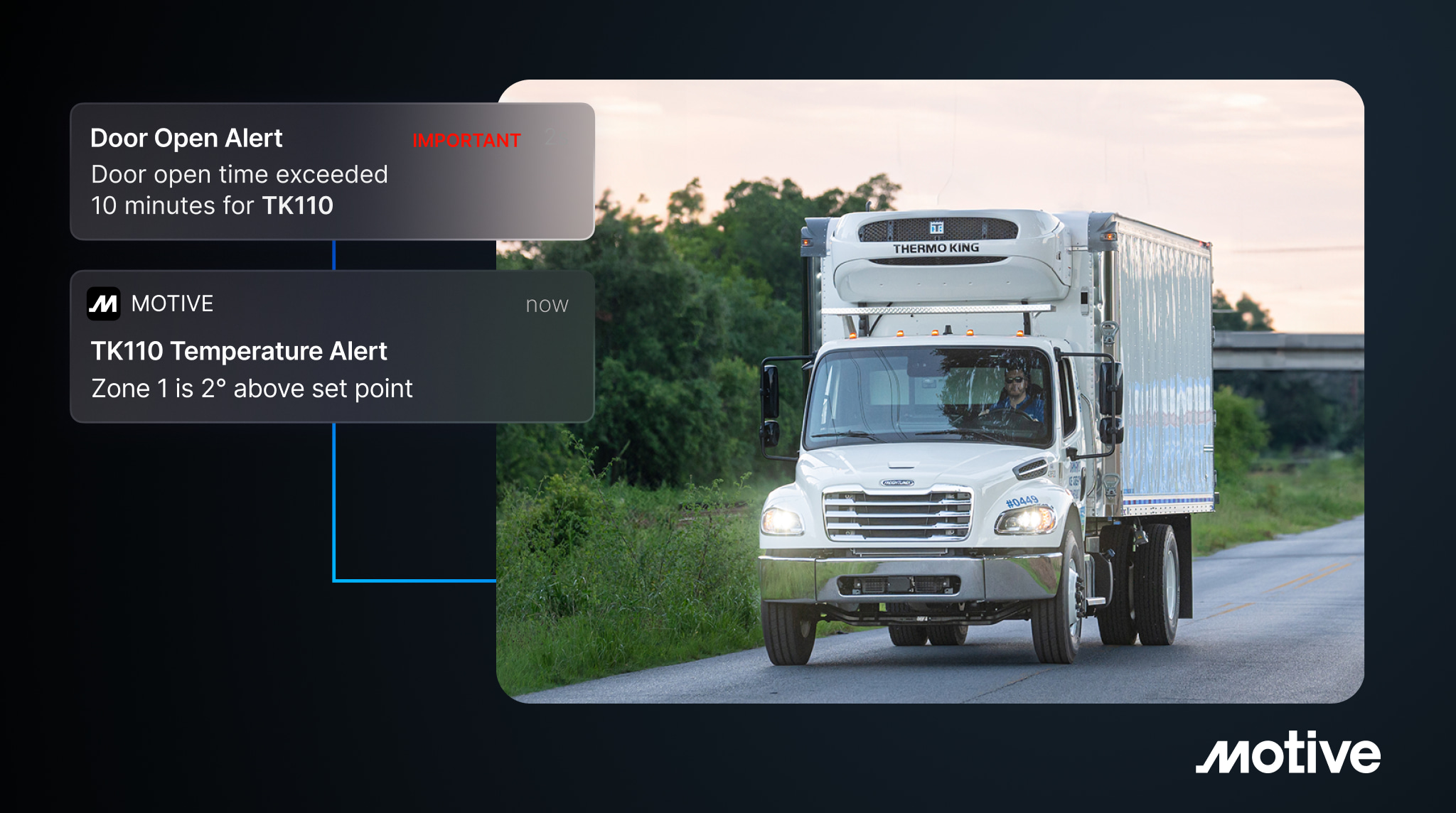
Higdon also said one of the biggest misconceptions outside the refrigerated transportation sector is that temperature-sensitive freight is simply a matter of keeping products frozen or preventing them from freezing.
In reality, many products must remain within a narrow temperature range throughout the entire supply chain to preserve quality, consistency, or efficacy, he said, pointing to ice cream as an example.
“It’s not just about the ice cream arriving frozen. It’s about it arriving frozen in such a way that throughout the entirety of the cold chain it remained within a very narrow band of temperature that was required for that consistency.” He explained that even the smallest temperature fluctuations can ultimately affect texture and taste.
In the case of pharmaceuticals and other sensitive products, the stakes can be even higher.
Cargo security application
While the sensor does support temperature-sensitive operations, Higdon said it is equally relevant for fleets concerned about cargo theft and unauthorized access. Trailers often sit unattended for extended periods, making door activity an important alert to have in real time.
“With the Motive platform, you have things like geofences and alerts around geofences that can be tied to time of day at different locations, and you can have a system that you build around that. That could help you understand when events are expected and when events are unexpected.”
The same alerting infrastructure can be used across temperature monitoring, humidity tracking, cargo security, and other operational workflows, helping ensure the right people receive actionable information without “overloading people who can’t act on those alerts with extra noise in their inbox.”
The ability to connect operational events with supporting data can also prove valuable when fleets need to investigate cargo disputes or defend themselves against claims.
During a separate panel discussion on equipment utilization held earlier in the conference and moderated by Higdon, one Motive customer shared an example of how tracking and location data helped resolve a dispute involving a shipment of orange juice.
Chris Jaffe, senior vice president of technology at Agmark, recalled that the load was dropped off on a Friday before the long weekend, but the customer later contacted the company claiming the product had spoiled and suggesting it had only arrived on Monday or Tuesday.
“They called us and said the orange juice is bad, and we said, ‘Well, you didn’t unload it when we dropped it off,’ and they said, ‘Oh no, we just got it this morning.’”
Using movement and location data from the Motive platform, Agmark was able to figure out what had actually happened. “We pulled up the chassis [data] and saw it moving around all weekend long,” Jaffe said. “They had moved it three or four times all weekend long around their yard.”
According to Jaffe, that shipment involved roughly 65,000 gallons of orange juice, worth approximately $150,000.
But having that information on hand helped preserve the company’s relationship with the customer.

“The people in the yard weren’t so happy about it, but the people actually paying the bills were happy because they may have cut out some waste and some dishonesty in their yard.”
And while Jaffe was discussing a broader visibility use case during that panel, rather than the new Door and Environmental Sensor specifically, the story highlighted the value of continuous visibility throughout a shipment’s lifecycle, especially when it comes to perishable and temperature-sensitive cargo. If questions even arise about cargo quality or handling, access to data can help fleets defend themselves.

Have your say
This is a moderated forum. Comments will no longer be published unless they are accompanied by a first and last name and a verifiable email address. (Today's Trucking will not publish or share the email address.) Profane language and content deemed to be libelous, racist, or threatening in nature will not be published under any circumstances.