Here is where AI can help with maintenance, according to Loblaw, Sobeys

Wayne Scott thought he had a pretty good handle on Samsara’s maintenance capabilities. Then he sat through the company’s Beyond keynote. When the presentation reached the part about predictive fault code information, the cost projections, he said, “‘Man, I didn’t know they could do that.'”
For Scott, who has spent more than four decades in fleet maintenance, the surprise wasn’t another dashboard or another report. It was seeing connected fleet technology evolve from telling maintenance managers what happened to helping them decide what to do next.
The fact that technology now goes further that collecting information and helps teams with administrative work surrounding it, all while producing better and accurate data, was where the Canadian fleets attending the conference in Las Vegas last week said the value lies.
From visibility to decisions
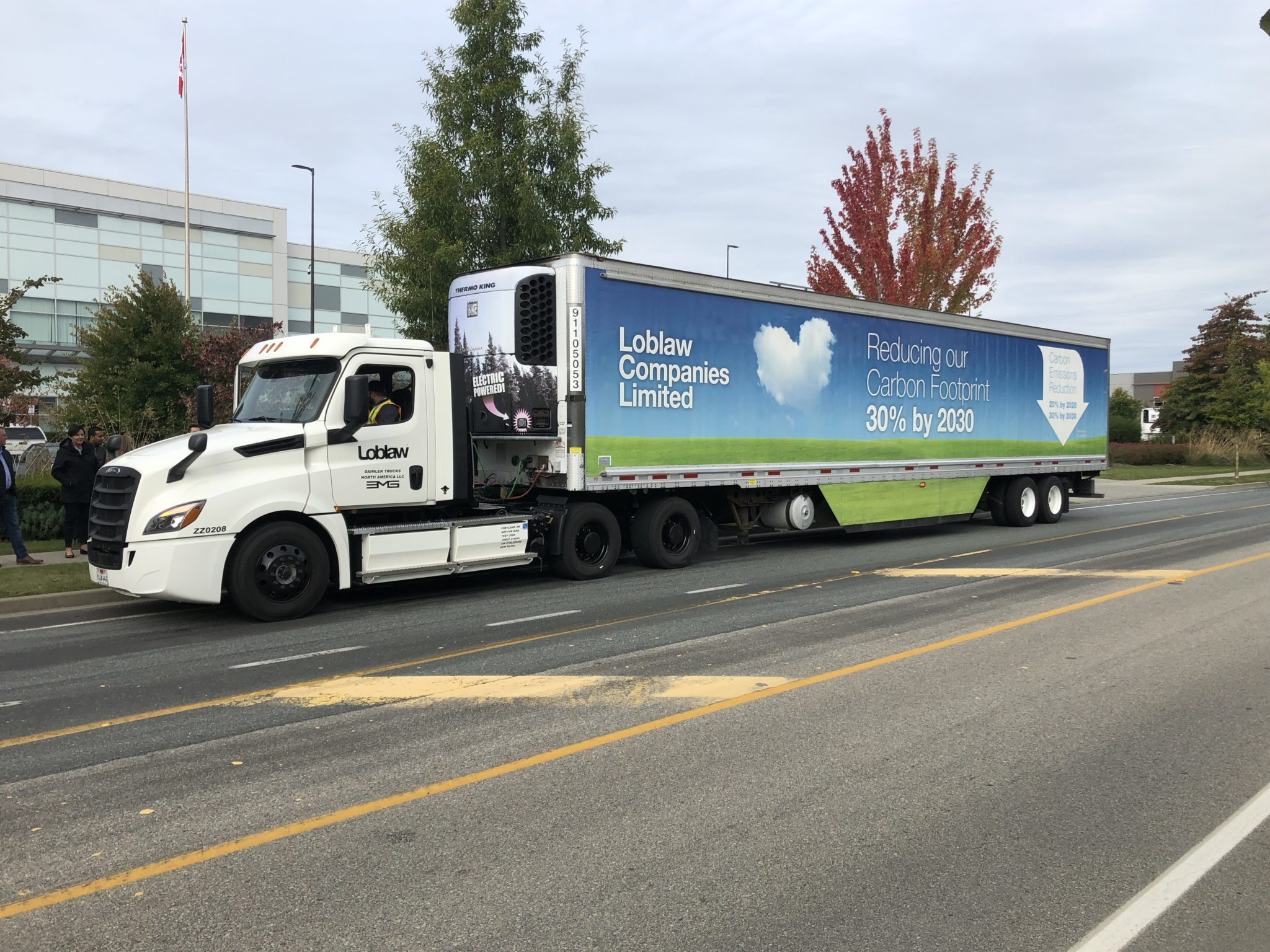
A technician by trade, Sccott spent two decades with Freightliner before running Challenger Motor Freight’s North American maintenance operation. Since joining Loblaw in 2007, his responsibilities have expanded well beyond fleet maintenance. Today, he oversees safety, compliance, fuel strategy, capital planning, ESG initiatives and the deployment of emerging technologies, including battery-electric, hydrogen and autonomous trucks.
When Loblaw first rolled out telematics across its fleet around 2009, the goal was to know where the trucks and trailers were. The next shift came ahead of Canada’s ELD mandate, when Loblaw replaced its telematics provider with Samsara.
“Six months before that, my boss came to me and said, ‘Hey, listen, we’ve got to get this ELD thing figured out… We’re struggling with our current provider,'” Scott recalled. Today, Loblaw operates around 1,000 trucks and 6,000 trailers and has expanded its use of Samsara products.
Visibility has become particularly important to the retailer as it took greater control of inbound freight from the U.S. The fleet now operates roughly 300 trucks south of the border hauling produce into Canada rather than relying on third-party carriers. “In the past what we would have done was we would have [to] third-party all that out… or broker it, or spot market it,” Scott said. “In the last few years we’ve taken that freight over predominantly… that brings better control, better consistency, of course, lower cost.”
Today, Scott’s team can see fault codes while a truck is still halfway across the country instead of waiting for it to return to the shop.
“I’ll go back to my Challenger days or my Freightliner days. You didn’t have any reports,” he said. “If you had a fuel economy issue or an oil consumption issue, you really were relying on just what you could see.”
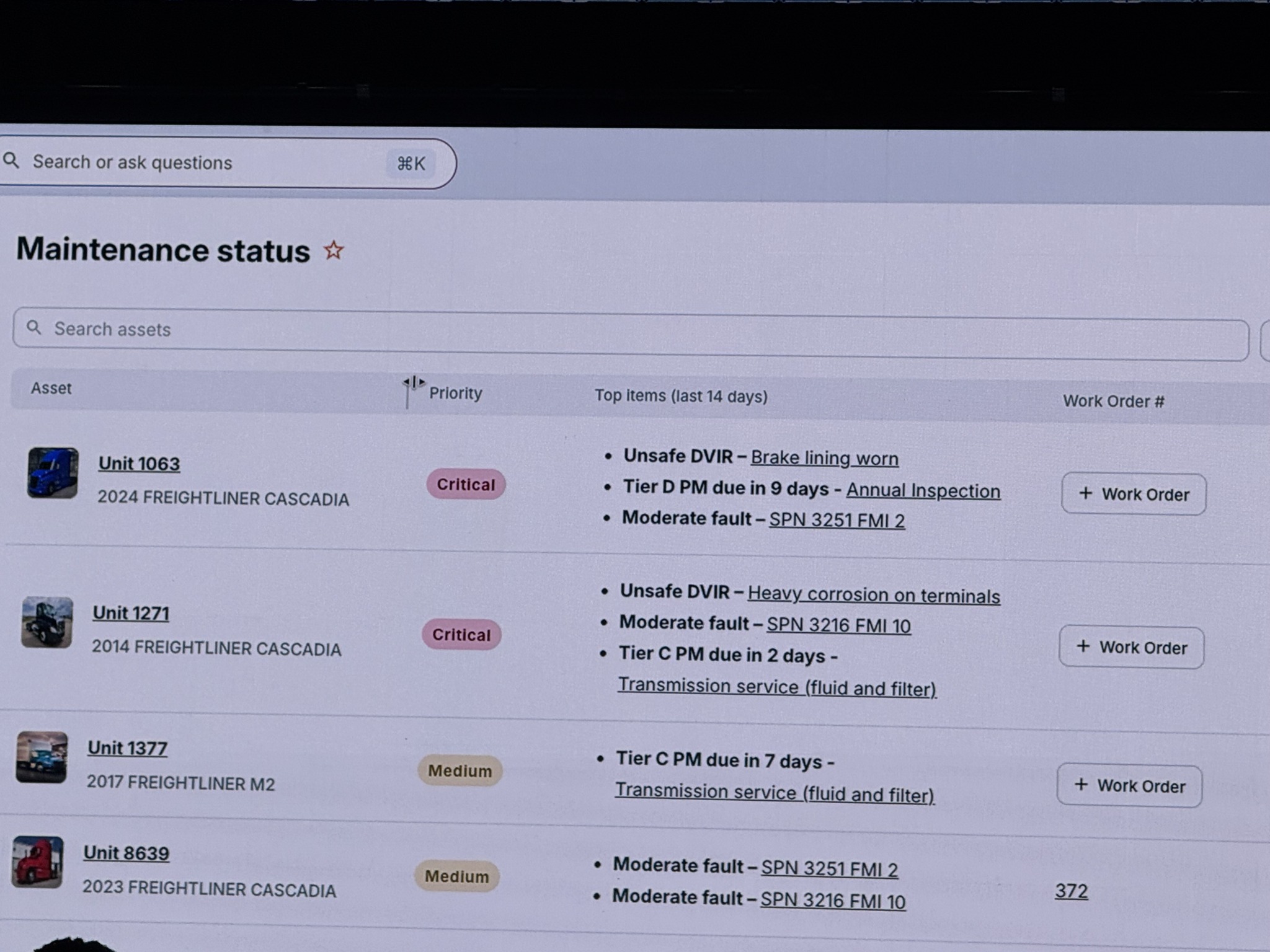
During the keynote presentation, Samsara unveiled AI-powered maintenance tools that assess fault-code severity, estimate repair costs, identify potential warranty coverage and predict how issues are likely to escalate.
“That’s a game changer,” Scott said of the new features.
He also admitted, “The evolution of the information is coming so fast that it’s almost hard to keep up,” saying he’s considering assigning subject-matter experts across maintenance, safety, compliance, fuel and operations to track new features and educate the rest of the organization.
Loblaw already relies on Samsara for ELDs, trailer tracking, AI dash cameras, reefer monitoring, door sensors and connected workflows such as driver pay. When it comes to maintenance, however, the company continues to use Toronto-based Cetaris as its maintenance management provider, which Scott said has seven to eight years of maintenance history and integrations behind it. Replacing it would represent a seven-figure investment.
Scott, who also serves on Samsara’s Customer Advisory Board, acknowledged the company’s maintenance module previously wasn’t where Loblaw needed it to be, particularly around warranty management, but said the progress demonstrated at Beyond was noticeable.
High-quality data helps shave off costs, too
However, another fellow large Canadian retailer already uses Samsara for its maintenance management.
During a separate customer panel, Aligan Sha, manager of fleet maintenance technology at Sobeys, said one of the biggest obstacles his team faced about six years ago wasn’t repairing the equipment itself or lack of the maintenance data — it was the quality of data and the reports, and the administrative work that followed repairs and was based on the poor data.
“Fleet management is highly data driven,” Sha said. “Capturing all those accurate and clean data into your maintenance system is going to be the key.”
That meant ensuring every labor operation and replacement part was assigned the correct VMRS code, allowing the fleet to accurately analyze repair histories, maintenance costs and component failures. Before introducing AI-powered invoice processing, however, that was difficult to achieve.
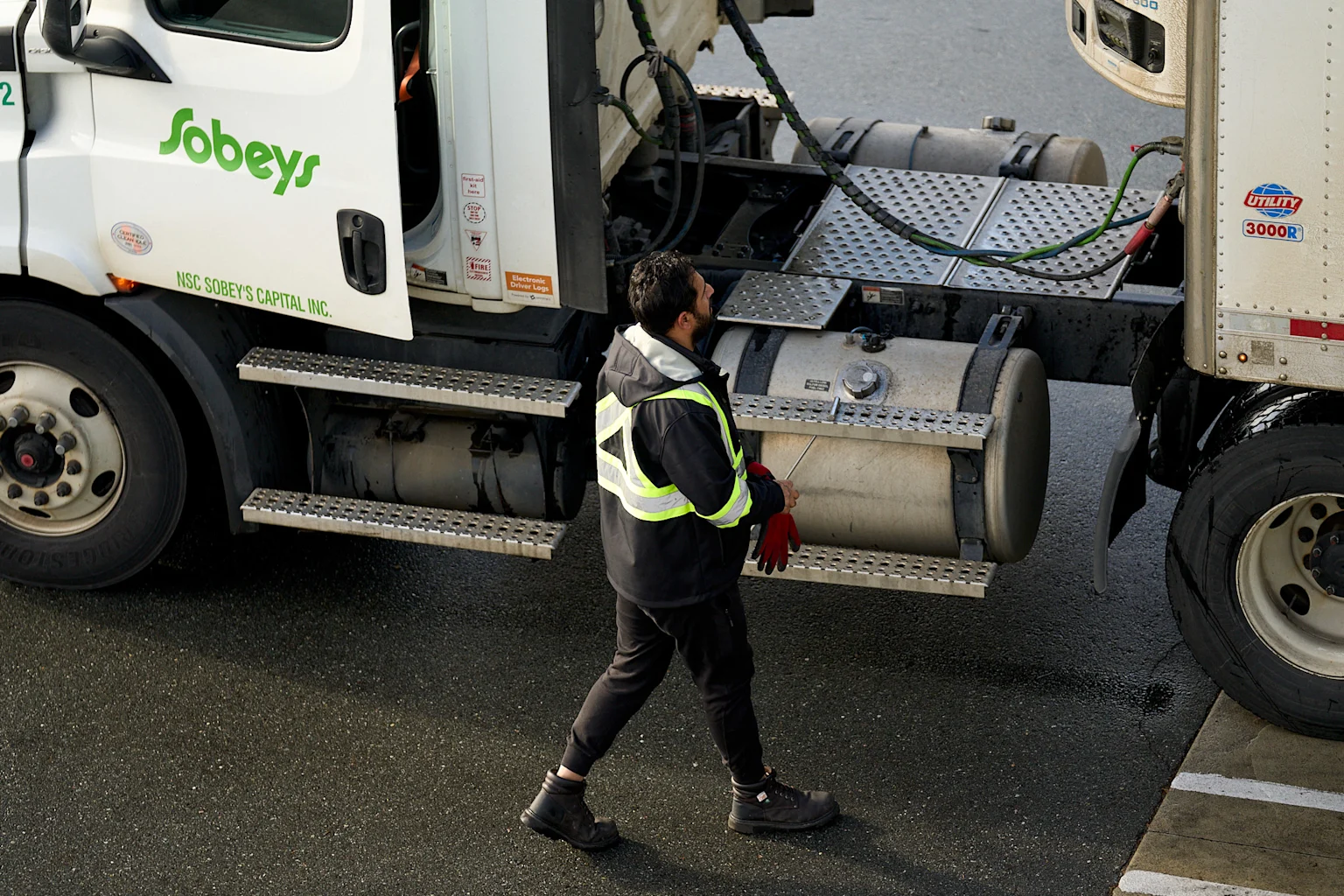
Without integrations, repair invoices had to be entered manually by Sobeys maintenance staff or third-party vendors. A five-page invoice with more than 15 labor lines could take 30 to 45 minutes to process, Sha said.
“Hydrocarbon dozer, also known as seventh injector, are often coded into the engine system instead of the exhaust system. Likewise, fifth wheel on the tractor, they’re coded into wheels or brake system instead of the coupling system,” Sha shares as an example, adding that some vendors also often submitt “one-line invoices” that simply listed a lump-sum repair cost with no meaningful breakdown of labour or parts.
“These data are completely garbage. It means nothing,” he said.
The lack of standardized information also limited Sobeys’ ability to review repair histories nationally and, in some cases, caused completed preventive maintenance work not being reflected in the system.
Sha said that changed after adopting Samsara’s connected maintenance platform. The AI reads repair invoices, summarizes the work performed, matches labor and parts to existing service tasks and categories, flags potential warranty opportunities and builds a work order automatically.
“It does all this in under two minutes per invoice compared with half an hour, 45 minutes earlier,” Sha said. “Complete game changer for me.”
The benefits extended beyond saving time. With less manual data entry, Sobeys no longer needs outside vendors to key invoices into its system.
“This actually puts us in a better position when negotiating contract for a lower rate. Secondly, no more integration cost. To integrate a vendor probably cost us $30-50,000 per vendor, and you’re kind of stuck with this guy after you integrated them. Now we have the full flexibility to switch vendors if this one’s underperforming without worrying about those costs.”
Meanwhile, technicians working in Sobeys’ own shops can now build work orders as repairs are being completed, automatically capturing labor time, parts usage and total repair costs.
Less paperwork, more maintenance
Scott listened to Sha’s presentation from the audience. When trucknews.com later asked whether the challenges around invoice coding and fragmented repair histories sounded familiar, he laughed and said, “It’s almost identical.”
Asked what a successful maintenance department should be spending less time doing five years from now, Scott didn’t hesitate in saying, “Paperwork.”
For him, that’s where AI has the biggest opportunity. For example, he recently used ChatGPT to turn an about 40-page technical document into a technician training quiz, a task that previously would have taken a day to complete. “I wanted to send out a quiz for everybody, just testing their knowledge on a few things… I went to grab a coffee, came back, it was done.”
He said that AI won’t be replacing maintenance professionals in the future, but it will free them to spend more time applying their expertise. That’s why Scott believes the future belongs to a combination of AI and what he calls “HI” — human intelligence.
“Let’s keep the paperwork out of it, keep the mechanics back on the floor, where they make money, save me money, where they’re most efficient.”

Have your say
This is a moderated forum. Comments will no longer be published unless they are accompanied by a first and last name and a verifiable email address. (Today's Trucking will not publish or share the email address.) Profane language and content deemed to be libelous, racist, or threatening in nature will not be published under any circumstances.